

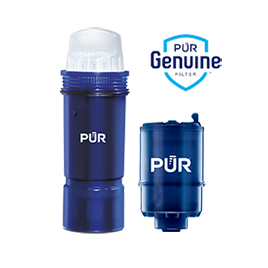


Contaminant Comparison Chart

For a complete list of contaminants that PUR filters reduce, please view our Performance Data Sheets here.


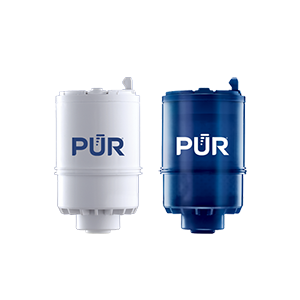
PUR & PUR PLUS FAUCET FILTERS
RF3375/RF9999

View Filters

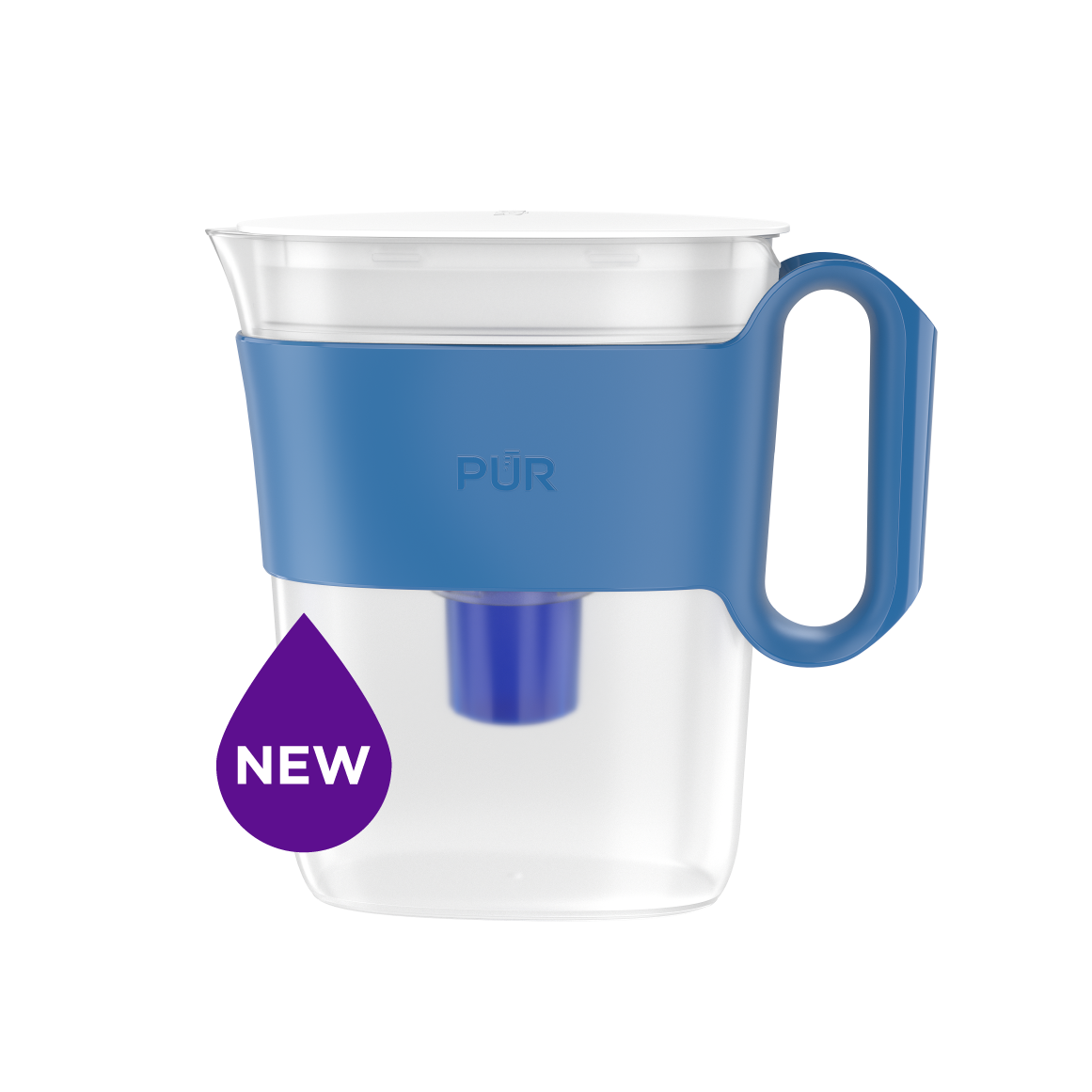
PUR PLUS PITCHER FILTERS
PPF951K

View Filter

PUR BASIC PITCHER FILTERS
PPF900Z

View Filter


Vs. Brita*

Lead ✓ ✓
Microplastics ✓ ✓
Mercury ✓ ✓ ✓
Chlorine Taste & Odor ✓ ✓ ✓
DEET ✓
TTHM ✓

PUR’s Filtration Systems Are Certified By NSF And WQA For Their Contamination Reduction. WQA certifications as of 5/27/21 for Faucet filter models RF-3375 and RF-9999.

¹ Certified to reduce 10X more chemical and physical substances than Brita’s® leading pitcher filter.
² Certified to reduce 3X more chemical and physical substances than Brita’s® leading pitcher filter.
³ Certified to reduce 2X more chemical and physical substances than Brita’s® leading pitcher filter.
*Versus best-selling Brita® pitcher filter OB03. Brita® is a trademark of Brita LP.
**Like other leading brands, PUR does not filter microbes. As of 3/1/23 Brita® and ZeroWater® were not certified to filter microbes. Brita® is a trademark of Brita LP. ZeroWater® is a trademark of Zero Technologies, LLC..
 

PUR & PUR PLUS FAUCET FILTERS


PUR & PUR PLUS FAUCET FILTERS
RF3375/RF9999

View Filters


Vs. Brita*

Lead ✓
Microplastics ✓
Mercury ✓
Chlorine Taste & Odor ✓
DEET ✓
TTHM ✓

PUR’s Filtration Systems Are Certified By NSF And WQA For Their Contamination Reduction. WQA certifications as of 5/27/21 for Faucet filter models RF-3375 and RF-9999.

¹ Certified to reduce 10X more chemical and physical substances than Brita’s® leading pitcher filter.
² Certified to reduce 3X more chemical and physical substances than Brita’s® leading pitcher filter.
³ Certified to reduce 2X more chemical and physical substances than Brita’s® leading pitcher filter.
*Versus best-selling Brita® pitcher filter OB03. Brita® is a trademark of Brita LP.
**Like other leading brands, PUR does not filter microbes. As of 3/1/23 Brita® and ZeroWater® were not certified to filter microbes. Brita® is a trademark of Brita LP. ZeroWater® is a trademark of Zero Technologies, LLC..


PUR PLUS PITCHER FILTERS


PUR PLUS PITCHER FILTERS
PPF951K

View Filter


Vs. Brita*

Lead ✓
Microplastics ✓
Mercury ✓
Chlorine Taste & Odor ✓
DEET
TTHM

PUR’s Filtration Systems Are Certified By NSF And WQA For Their Contamination Reduction. WQA certifications as of 5/27/21 for Faucet filter models RF-3375 and RF-9999.

¹ Certified to reduce 10X more chemical and physical substances than Brita’s® leading pitcher filter.
² Certified to reduce 3X more chemical and physical substances than Brita’s® leading pitcher filter.
³ Certified to reduce 2X more chemical and physical substances than Brita’s® leading pitcher filter.
*Versus best-selling Brita® pitcher filter OB03. Brita® is a trademark of Brita LP.
**Like other leading brands, PUR does not filter microbes. As of 3/1/23 Brita® and ZeroWater® were not certified to filter microbes. Brita® is a trademark of Brita LP. ZeroWater® is a trademark of Zero Technologies, LLC..


PUR BASIC PITCHER FILTERS


PUR BASIC PITCHER FILTERS
PPF900Z

View Filter


Vs. Brita*

Lead
Microplastics
Mercury ✓
Chlorine Taste & Odor ✓
DEET
TTHM

PUR’s Filtration Systems Are Certified By NSF And WQA For Their Contamination Reduction. WQA certifications as of 5/27/21 for Faucet filter models RF-3375 and RF-9999.

¹ Certified to reduce 10X more chemical and physical substances than Brita’s® leading pitcher filter.
² Certified to reduce 3X more chemical and physical substances than Brita’s® leading pitcher filter.
³ Certified to reduce 2X more chemical and physical substances than Brita’s® leading pitcher filter.
*Versus best-selling Brita® pitcher filter OB03. Brita® is a trademark of Brita LP.
**Like other leading brands, PUR does not filter microbes. As of 3/1/23 Brita® and ZeroWater® were not certified to filter microbes. Brita® is a trademark of Brita LP. ZeroWater® is a trademark of Zero Technologies, LLC..


China Top 10 Faux Wood Wall Panel Manufacturers

Choosing among China’s leading Faux Wood Wall Panels manufacturers takes more than comparing catalog photos. Buyers should examine the panel core, surface finish, edge details, installation system, and published test data. A walnut effect may look convincing under showroom lights, yet appear flat beside a real window. Details matter.

British designer William Morris offered a useful design principle: “Have nothing in your houses that you do not know to be useful, or believe to be beautiful.” Morris was not a modern wall-panel engineer, so his words are a design lens, not a technical endorsement. Applied here, they invite buyers to weigh appearance against practical needs such as cleaning, moisture exposure, and room use.

This guide profiles ten China-based manufacturers and considers their product range, customization, production information, and evidence behind performance claims. Ask for current samples. Check whether the grain repeats across adjacent panels, and inspect corners where the finish can reveal quality. Request installation guidance and clarify what testing covers; a broad claim is not a specification. No shortlist is perfect. Supplier information can change, and this overview should support—not replace—your own sample review and project checks. A little caution is useful.

China Top 10 Faux Wood Wall Panel Manufacturers

What Faux Wood Wall Panels Are and Where They Are Used

Faux wood wall panels are manufactured boards or planks designed to resemble timber grain and color. Common materials include PVC, wood-plastic composite, and fiberboard, each with different weight, moisture resistance, and installation needs. Not solid timber. A molded surface may feel smoother than natural wood, while printed finishes can repeat their grain pattern. The difference is easier to notice up close. Check the panel’s core, edge finish, and installation instructions before choosing it; “water-resistant” does not automatically mean suitable for constant wetting.

These panels are used on living-room feature walls, bedroom headboards, office interiors, shop displays, and sometimes ceilings. In kitchens, they can add warmth behind a dining area, but placement near heat or splashing water needs careful product selection. Bathrooms call for panels rated for humid conditions, and shower areas require specific approval from the manufacturer. Small detail, big difference. Before installation, the wall should be clean, dry, and reasonably even; uneven surfaces can make joints stand out. Leave any expansion gap the instructions specify, especially with plastic-based panels. Their realistic grain can soften a plain room, though a very uniform finish may look artificial under bright side lighting. A small sample viewed at home is more useful than a tiny catalog image.

How Chinese Manufacturers Design and Produce Faux Wood Panels

Chinese manufacturers typically begin faux wood wall panel design with a practical brief: the room’s lighting, wall dimensions, moisture exposure, and desired wood character. Designers study real timber for grain direction, knots, and color variation, then adapt those details for repeatable production. Digital artwork may be printed onto a panel surface, while molded textures can add shallow grooves that catch light. Small samples help teams compare the printed grain with the physical texture.

Production methods vary by panel material. Some lines use PVC or composite substrates; others apply decorative films to engineered boards. Operators check surface cleanliness, coating or film alignment, and bonding conditions before panels move through finishing. Cutting and edge treatment matter too. A clean edge can make an installation look convincing, while a rough one draws the eye immediately. Details matter.

Quality checks often include comparing color under different lighting, measuring panel thickness, and inspecting corners for chips or separation. Manufacturers may also test how surfaces respond to routine cleaning, following the intended product specification. Still, a perfect sample does not guarantee every batch will look identical. Printed grain can repeat too visibly across a large wall, and texture may feel less natural than expected. That gap deserves another design review.

China’s Faux Wood Wall Panel Manufacturing Workflow

A typical production sequence for PVC/WPC faux wood panels. Processes vary by material and product; the values show step order only, not production time, capacity, or market share.

Typical stages include material preparation, compounding, forming, cooling, surface finishing, and quality inspection and packing.

Key Factors for Evaluating Faux Wood Panel Manufacturers in China

China Top 10 Faux Wood Wall Panel Manufacturers

Key Factors for Evaluating Faux Wood Panel Manufacturers in China

Choosing a manufacturer takes more than comparing catalog photos and unit prices. Check whether product specifications state panel thickness, core material, surface finish, and installation method. Ask for recent test reports covering moisture response, surface wear, and emissions, and confirm that the tested product matches the sample you received. A neat display board proves little about batch consistency. Inspect cut edges for uneven layers, and fit several panels together to spot gaps or color shifts.

Production controls matter, too. Ask how the factory checks incoming materials, dimensions, and finished-panel defects, and whether it keeps batch records. The 2023 Global Status Report for Buildings and Construction, published by UNEP and GlobalABC, attributes 37% of global energy- and process-related CO₂ emissions in 2022 to buildings and construction. That figure does not isolate wall panels, but it makes material sourcing and environmental documentation worth examining. A supplier’s sustainability claim is not enough; request supporting evidence. I would still compare independent results with an actual site trial. Small differences show up.

Tips: Order samples from more than one production batch. Check them under the room’s actual lighting, and keep written specifications with your quotation.

Profiles of Ten Notable Faux Wood Wall Panel Manufacturers

Profiles of ten notable Chinese faux wood wall panel manufacturers are most useful when they reveal distinct production strengths, not just attractive catalog images. One may specialize in lightweight PVC panels; another may offer wood-plastic composites for humid interiors. A third might focus on embossed grain, while a fourth provides long, narrow slats for feature walls. Details matter.

A fifth profile could highlight custom colors and small-batch orders. A sixth may emphasize stable dimensions, which help installers align seams across a wide wall. A seventh might supply matching trim. A supplier focused on fire-performance documentation deserves separate review, as does one with clear installation guidance. The tenth profile could examine export packaging: protected corners and dry, secure cartons reduce damage before delivery. Small things count.

These are comparison points, not claims that every supplier excels in each area. Buyers should request current specifications, sample panels, and written care instructions. Check the surface under angled light; printed grain can look convincing online but repetitive in person. Ask how panels respond to heat, moisture, and cleaning. A slight mismatch between sample and shipment is possible, so confirm tolerances before ordering. Even careful checks cannot remove every uncertainty.

China Top 10 Faux Wood Wall Panel Manufacturers - Profiles of Ten Notable Faux Wood Wall Panel Manufacturers
Profile Common Panel Construction Typical Wood-Look Finish Moisture Considerations Common Applications Installation Considerations Details to Verify with a Supplier
Profile 1 Extruded wood-plastic composite (WPC) Embossed or printed wood grain; finishes vary by product Often selected for improved moisture resistance compared with untreated wood; performance depends on formulation and construction Interior feature walls and, where specifically rated, sheltered exterior areas Check the recommended fixing system, expansion allowance, and substrate requirements Material composition, fire classification, installation guide, and suitability for the intended exposure
Profile 2 Hollow PVC profiles Printed or laminated wood-grain surface PVC is not readily damaged by water, but joints and the supporting wall still require appropriate detailing Interior walls in areas where easy cleaning is useful Confirm profile direction, edge trims, and how panels are fixed or joined Fire and smoke documentation, surface-film durability, and cleaning instructions
Profile 3 Solid PVC panels Colored, printed, or laminated wood-effect finish Generally moisture-tolerant as a panel material; suitability for wet locations depends on the complete installed system Interior walls, including some utility or wash-down areas when the product is specified for them Use compatible trims and sealants where required; follow the manufacturer’s joint details Wet-area approval, fire classification, joint-sealing requirements, and maintenance guidance
Profile 4 MDF or fiberboard with a decorative film or printed surface Wood-grain film or decorative paper finish Standard fiberboard may swell if exposed to water; moisture-resistant grades do not automatically make a panel waterproof Dry interior feature walls and decorative applications Keep edges protected and install on a suitably dry, stable substrate Core grade, edge treatment, formaldehyde-emissions information, and allowable service conditions
Profile 5 Plywood with a wood-look veneer or decorative surface Printed surface or natural veneer selected for a wood appearance Moisture performance varies with the plywood grade, surface, edge protection, and installation environment Interior wall cladding and built-in decorative surfaces Allow for suitable fixing and account for panel movement and exposed edges Plywood grade, veneer or finish specification, emissions information, and fire documentation
Profile 6 Molded polyurethane decorative panels Molded wood texture, often with a coating or paint finish Panel moisture resistance does not establish suitability for continuous water exposure or exterior use Interior accent walls and decorative architectural details Check adhesive compatibility, joint finishing, and whether mechanical fixing is required Fire-test documentation, coating requirements, installation instructions, and approved locations
Profile 7 Polystyrene (PS) decorative panels or profiles Molded or printed wood-effect surface Often used in dry interior settings; verify the product’s resistance to humidity and cleaning agents Light-duty interior decoration and feature walls Use an adhesive confirmed as compatible with the panel material and wall substrate Fire classification, impact resistance, adhesive guidance, and cleaning limitations
Profile 8 Fiber-cement panels with a wood-grain texture or coating Textured surface with a factory-applied or site-applied finish Designed for more demanding exposure than many interior decorative boards, but system detailing remains important Exterior or interior cladding where the specific panel is approved for the application Follow the specified framing, fastening, joint, flashing, and coating details Applicable product approvals, fire documentation, exposure limits, and complete installation requirements
Profile 9 High-pressure laminate (HPL) on a suitable panel substrate Printed wood-grain decorative laminate The laminate surface can resist routine cleaning, but the substrate and panel edges may remain moisture-sensitive Interior wall surfaces in residential, commercial, or public spaces Confirm the approved bonding method, substrate, edge treatment, and joint layout Laminate type, substrate grade, fire documentation, cleaning instructions, and indoor-use limitations
Profile 10 Aluminum panels with a wood-effect coating or transfer finish Printed or transferred wood-grain appearance over a metal surface Metal itself is not wood and does not swell like fiberboard; coating performance and corrosion protection depend on specification Interior cladding and exterior applications when the coating and panel system are rated for them Check the support system, fasteners, drainage details, and allowance for thermal movement Alloy and coating specification, corrosion performance, fire documentation, and approved exposure conditions

Scope note: No source list identifying ten specific manufacturers was provided. To avoid presenting unverified company data as fact, the entries above describe common faux-wood panel constructions and supplier capabilities; they are not verified company profiles or a ranking.

Comparing Product Range, Customization, and Export Capabilities

Comparing China’s top 10 faux wood wall panel manufacturers is more useful when product range means practical choice, not just a long catalog. Check panel thickness, width, surface texture, and available colors. Some suppliers focus on lightweight indoor boards, while others offer weather-resistant options for covered exterior spaces. Ask for close-up samples: a printed wood grain can look convincing online but feel flat under your hand. Details matter. Confirm how finishes perform under ordinary cleaning and changing indoor temperatures.

Customization can include color matching, embossed grain, panel lengths, edge profiles, and private packaging. Ask which changes require new tooling, minimum order quantities, or longer production times. Export capability is not just shipping abroad. Request sample lead times, packing photos, carton dimensions, loading plans, and clear information about production schedules.

Strong packaging helps prevent chipped edges and surface scratches during transit. A polished quote is not proof of consistent quality. Compare samples with production specifications, and ask how the factory checks color variation between batches. No comparison is perfect; supplier replies can be clearer than factory-floor performance. Ask specific questions, and keep the answers in writing.