




Contaminant Comparison Chart

For a complete list of contaminants that PUR filters reduce, please view our Performance Data Sheets here.


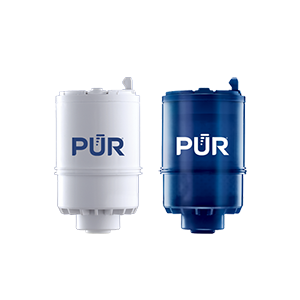
PUR & PUR PLUS FAUCET FILTERS
RF3375/RF9999

View Filters

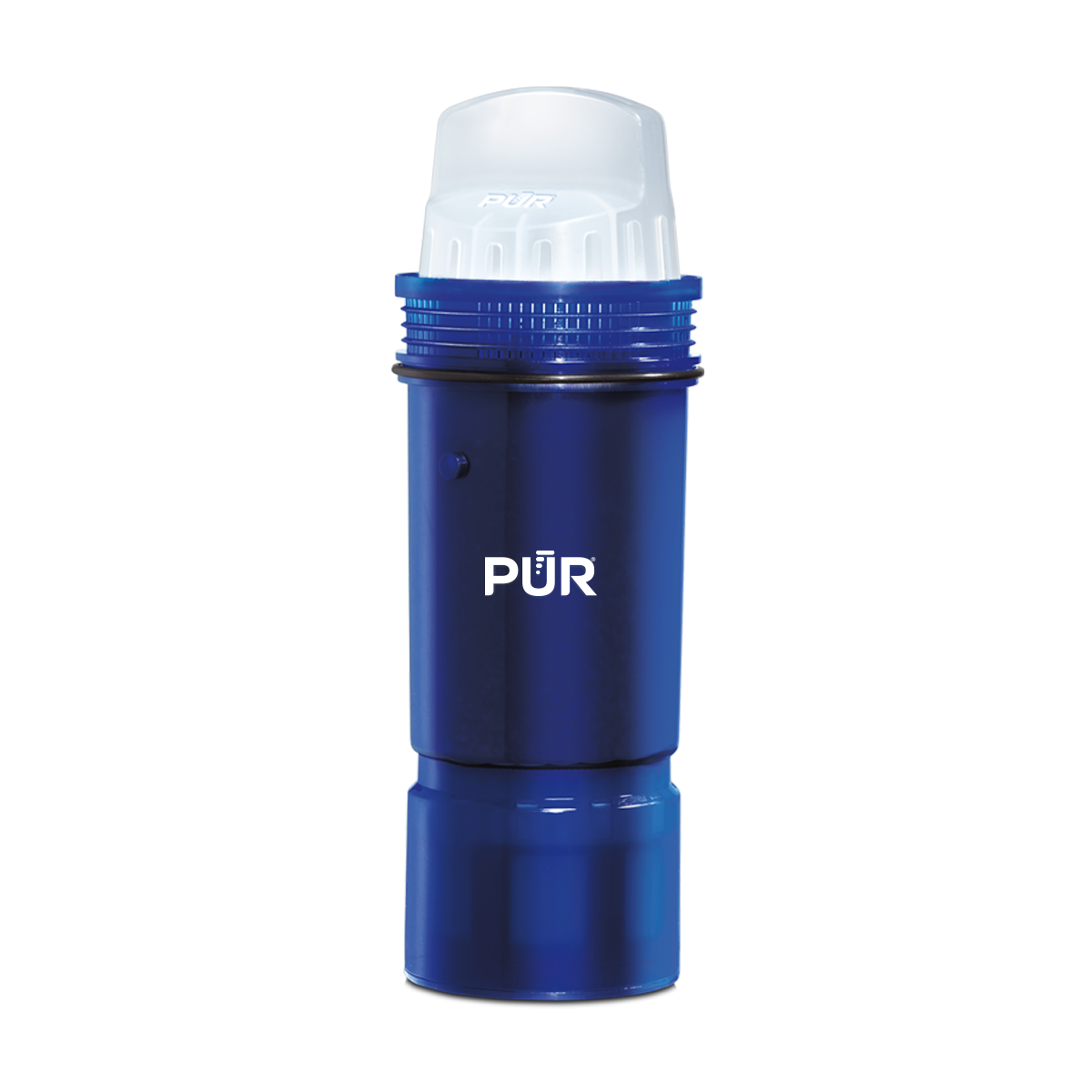
PUR PLUS PITCHER FILTERS
PPF951K

View Filter

PUR BASIC PITCHER FILTERS
PPF900Z

View Filter


Vs. Brita*

Lead ✓ ✓
Microplastics ✓ ✓
Mercury ✓ ✓ ✓
Chlorine Taste & Odor ✓ ✓ ✓
DEET ✓
TTHM ✓

PUR’s Filtration Systems Are Certified By NSF And WQA For Their Contamination Reduction. WQA certifications as of 5/27/21 for Faucet filter models RF-3375 and RF-9999.

¹ Certified to reduce 10X more chemical and physical substances than Brita’s® leading pitcher filter.
² Certified to reduce 3X more chemical and physical substances than Brita’s® leading pitcher filter.
³ Certified to reduce 2X more chemical and physical substances than Brita’s® leading pitcher filter.
*Versus best-selling Brita® pitcher filter OB03. Brita® is a trademark of Brita LP.
**Like other leading brands, PUR does not filter microbes. As of 3/1/23 Brita® and ZeroWater® were not certified to filter microbes. Brita® is a trademark of Brita LP. ZeroWater® is a trademark of Zero Technologies, LLC..
 

PUR & PUR PLUS FAUCET FILTERS


PUR & PUR PLUS FAUCET FILTERS
RF3375/RF9999

View Filters


Vs. Brita*

Lead ✓
Microplastics ✓
Mercury ✓
Chlorine Taste & Odor ✓
DEET ✓
TTHM ✓

PUR’s Filtration Systems Are Certified By NSF And WQA For Their Contamination Reduction. WQA certifications as of 5/27/21 for Faucet filter models RF-3375 and RF-9999.

¹ Certified to reduce 10X more chemical and physical substances than Brita’s® leading pitcher filter.
² Certified to reduce 3X more chemical and physical substances than Brita’s® leading pitcher filter.
³ Certified to reduce 2X more chemical and physical substances than Brita’s® leading pitcher filter.
*Versus best-selling Brita® pitcher filter OB03. Brita® is a trademark of Brita LP.
**Like other leading brands, PUR does not filter microbes. As of 3/1/23 Brita® and ZeroWater® were not certified to filter microbes. Brita® is a trademark of Brita LP. ZeroWater® is a trademark of Zero Technologies, LLC..


PUR PLUS PITCHER FILTERS


PUR PLUS PITCHER FILTERS
PPF951K

View Filter


Vs. Brita*

Lead ✓
Microplastics ✓
Mercury ✓
Chlorine Taste & Odor ✓
DEET
TTHM

PUR’s Filtration Systems Are Certified By NSF And WQA For Their Contamination Reduction. WQA certifications as of 5/27/21 for Faucet filter models RF-3375 and RF-9999.

¹ Certified to reduce 10X more chemical and physical substances than Brita’s® leading pitcher filter.
² Certified to reduce 3X more chemical and physical substances than Brita’s® leading pitcher filter.
³ Certified to reduce 2X more chemical and physical substances than Brita’s® leading pitcher filter.
*Versus best-selling Brita® pitcher filter OB03. Brita® is a trademark of Brita LP.
**Like other leading brands, PUR does not filter microbes. As of 3/1/23 Brita® and ZeroWater® were not certified to filter microbes. Brita® is a trademark of Brita LP. ZeroWater® is a trademark of Zero Technologies, LLC..


PUR BASIC PITCHER FILTERS


PUR BASIC PITCHER FILTERS
PPF900Z

View Filter


Vs. Brita*

Lead
Microplastics
Mercury ✓
Chlorine Taste & Odor ✓
DEET
TTHM

PUR’s Filtration Systems Are Certified By NSF And WQA For Their Contamination Reduction. WQA certifications as of 5/27/21 for Faucet filter models RF-3375 and RF-9999.

¹ Certified to reduce 10X more chemical and physical substances than Brita’s® leading pitcher filter.
² Certified to reduce 3X more chemical and physical substances than Brita’s® leading pitcher filter.
³ Certified to reduce 2X more chemical and physical substances than Brita’s® leading pitcher filter.
*Versus best-selling Brita® pitcher filter OB03. Brita® is a trademark of Brita LP.
**Like other leading brands, PUR does not filter microbes. As of 3/1/23 Brita® and ZeroWater® were not certified to filter microbes. Brita® is a trademark of Brita LP. ZeroWater® is a trademark of Zero Technologies, LLC..


Why Choose Sheet Metal Parts for Global Sourcing?

Global sourcing has changed how manufacturers evaluate Sheet Metal Parts. The decision is no longer based only on the lowest quoted price. Buyers now examine material traceability, forming accuracy, surface finish, packaging, and delivery consistency.

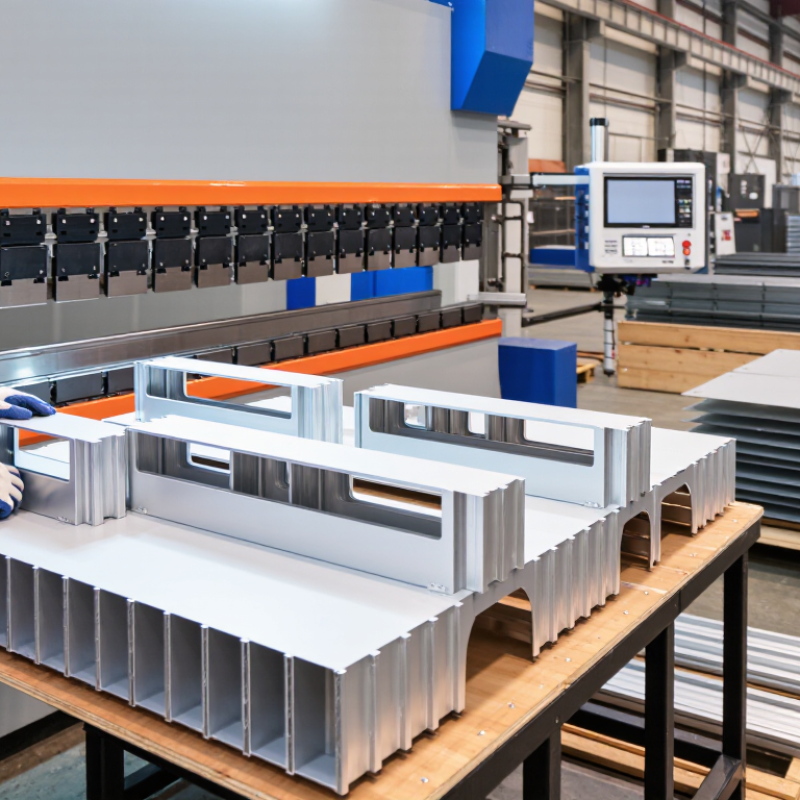
Sheet Metal Parts can support global programs because their geometry is often standardized. A steel bracket, aluminum enclosure, or stainless-steel panel can move between qualified suppliers with limited design changes. Laser cutting creates clean profiles. Press brakes form repeatable bends. Powder coating protects surfaces during storage and shipping. These details matter when parts travel thousands of miles before assembly.

Taiichi Ohno, a manufacturing pioneer, said, “Without standards, there can be no improvement.” His principle remains practical for international sourcing. Clear drawings, defined tolerances, inspection plans, and approved material grades give suppliers the same target. They also help buyers compare factories fairly, rather than comparing promises.

The real advantage is control.

In my experience, sourcing works best when engineers discuss manufacturability before requesting quotations. A sharp internal corner may increase tooling effort. A loose tolerance may reduce cost without weakening performance. Yet global sourcing is not automatically safer or cheaper. Communication gaps, inconsistent inspection methods, and rushed samples can create expensive rework.

That uncomfortable truth deserves attention. A supplier may deliver an attractive prototype but struggle with production volume. Another may offer a low price while overlooking packaging damage. Strong sourcing teams visit facilities when possible, review quality records, and test samples under realistic conditions. They choose Sheet Metal Parts suppliers for proven capability, not attractive words.

Why Choose Sheet Metal Parts for Global Sourcing?

Sheet Metal’s Global Role: 1.89 Billion Tonnes of Steel Made in 2023

Why Choose Sheet Metal Parts for Global Sourcing?

Global steel production reached about 1.89 billion tonnes in 2023. This figure shows the scale behind sheet metal sourcing. Steel mills, service centers, and fabricators operate across many regions. Buyers can often compare material availability, lead times, and processing capacity. Sheet metal also supports practical production methods, including laser cutting, bending, punching, and welding. These processes suit enclosures, brackets, panels, frames, and other engineered parts. Standard material grades can simplify technical communication between international teams.

However, large production does not guarantee smooth sourcing. A supplier may quote quickly but struggle with tolerances or surface quality. Material certificates can also vary in detail. I have found that a clear drawing matters more than a broad request for “strong steel.” Specify thickness, grade, bend radius, finish, flatness, and inspection needs. Small omissions create expensive revisions. Sometimes, the cheapest quote becomes the slowest option.

Tips: Ask for a first-article sample before full production. Check critical dimensions with a suitable gauge. Confirm packaging for sharp edges and finished surfaces. Request traceable material records when consistency matters. Keep communication simple, with marked drawings and photographs. A minor design review can prevent major tooling changes. Be realistic about the 1.89 billion-tonne figure: it reflects total steel output, not guaranteed capacity for your part. That distinction deserves attention.

Material Economics: Steel at 7.85 vs Aluminum at 2.70 g/cm³

Why Choose Sheet Metal Parts for Global Sourcing?

Material economics often begins with density. Steel weighs about 7.85 g/cm³, while aluminum weighs only 2.70 g/cm³. A steel bracket measuring 1,000 cm³ weighs nearly 7.85 kilograms. The same aluminum bracket weighs about 2.70 kilograms. That difference affects freight charges, handling, installation effort, and long-term equipment weight.

7.85 g/cm³
Steel density
2.70 g/cm³
Aluminum density

Steel usually offers a lower price per kilogram and strong resistance to deformation. It suits frames, cabinets, brackets, and industrial supports. Aluminum costs more in many markets, but its lighter weight can reduce shipping and labor expenses. It also resists corrosion naturally when the design and finish are suitable. My first sourcing estimates often focused too heavily on material price. That was incomplete. A lighter part may create savings elsewhere.

Tips: Compare cost per finished part, not only cost per kilogram. Request material certificates and verify thickness, alloy, tolerances, and surface requirements. Include packaging and freight in the comparison. Small details matter.

Production method changes the calculation. Steel may need protective coating, adding time and process cost. Aluminum can require different tooling settings and careful control around scratches or distortion. Supplier experience with bending radius, hole accuracy, and batch consistency remains important. A simple drawing does not guarantee a simple result. Test samples can reveal problems before mass production.Winvalid

Process Selection: Laser Cutting, Bending, and ISO 2768 Tolerances

Why Choose Sheet Metal Parts for Global Sourcing?

Laser cutting, bending, and ISO 2768 tolerances shape the real cost of sheet metal parts. Laser cutting suits flat profiles with clean edges and fast design changes. It also reduces tooling needs for low and medium volumes. However, small holes near edges may distort from heat. Experienced suppliers check minimum feature sizes before production.

Bending requires more planning than many drawings suggest. Bend allowance, material thickness, grain direction, and springback affect the final shape. A 90-degree bend may not measure exactly 90 degrees after forming. ISO 2768 provides general tolerances when drawings lack individual limits. It does not replace tighter requirements for holes, mounting faces, or sealing areas. On global projects, clear datums and inspection methods prevent different interpretations between factories. I have seen good parts fail because the drawing defined dimensions, but not the measurement direction. That mistake is easy to repeat.

Tips: Mark critical dimensions directly on the drawing. State the material grade, thickness, surface finish, and deburring requirement. Ask for a first-article inspection report before full production. Include bend radius and grain direction when appearance or strength matters. Keep packaging details practical, especially for long-distance shipping. A perfect specification is uncommon. Review it after the first sample.

Supplier Cost Comparison: Material, Labor, Tooling, Freight, and MOQ

Why Choose Sheet Metal Parts for Global Sourcing?

Sheet metal sourcing becomes clearer when every cost is separated. Material usually dominates thin-gauge parts, especially stainless steel and aluminum. The World Steel Association’s 2024 data shows global crude steel production exceeded 1.8 billion tonnes, supporting broad material availability. Labor rates still matter, but automation can reduce cutting and bending hours. Ask for the machine rate, setup time, and inspection labor separately. Tooling may be modest for laser-cut parts, yet forming dies can change the calculation quickly.

Freight is less predictable than many supplier quotes suggest. UNCTAD’s Review of Maritime Transport 2023 reported that container freight rates remained well above pre-pandemic levels during recent disruptions. A low unit price may therefore lose its advantage after ocean freight, insurance, port fees, and inland delivery. The World Bank’s 2023 Logistics Performance Index evaluates customs, infrastructure, shipment tracking, and timeliness on a one-to-five scale. These factors affect real delivery cost. MOQ also deserves attention. Higher volume can spread tooling costs, but excess inventory ties up cash and warehouse space. That assumption can fail.

Tips: Request three quantities, such as 100, 500, and 2,000 pieces. Compare landed cost, not unit price. Confirm material certificates, flat-pattern tolerances, packaging, and payment terms. My early comparison missed packaging damage risk. It was a useful correction. A supplier with slightly higher labor costs may still win through tighter process control and fewer rejected parts.

Why Choose Sheet Metal Parts for Global Sourcing? - Supplier Cost Comparison: Material, Labor, Tooling, Freight, and MOQ

Indicative global sourcing comparison for a standard 2.0 mm cold-rolled mild-steel laser-cut and press-braked enclosure bracket. Figures are shown in USD and represent typical commercial ranges rather than quotes from any specific company or brand.

Sourcing Region Material Cost
per Part
Direct Labor &
Processing per Part
Tooling / Setup Cost
per Project
Estimated Freight &
Insurance per Part
Typical MOQ Indicative Landed Cost
per Part
Typical Production
Lead Time
Commercial Consideration
Mainland China $1.05–$1.35 $0.55–$0.95 $150–$450 $0.18–$0.45 100–500 pcs $1.78–$2.75 4–7 weeks Strongest combination of fabrication capacity, process variety, and volume economics.
India $1.10–$1.45 $0.60–$1.10 $150–$500 $0.22–$0.55 100–500 pcs $1.92–$3.10 5–8 weeks Competitive labor rates; supplier capability and export logistics should be verified carefully.
Mexico $1.20–$1.55 $0.95–$1.60 $200–$650 $0.08–$0.30 50–250 pcs $2.23–$3.45 3–6 weeks Shorter North American transit can reduce inventory, customs exposure, and replenishment time.
Eastern Europe $1.25–$1.65 $1.10–$1.90 $250–$800 $0.10–$0.35 50–250 pcs $2.45–$3.90 3–7 weeks Useful for European delivery programs where proximity and regional supply continuity matter.
United States $1.35–$1.85 $1.80–$3.20 $300–$1,000 $0.05–$0.20 25–100 pcs $3.20–$5.25 2–5 weeks Higher conversion cost, but often favorable for low MOQ, rapid revisions, and domestic delivery.
Cost comparison basis: 1,000-piece production order, standard mild-steel sheet, laser cutting, press braking, deburring, and basic protective packaging. Landed-cost ranges exclude duties, taxes, certification, special surface treatment, and payment fees.
How to interpret the comparison:
  • Material: Mild-steel sheet typically represents a major portion of part cost; stainless steel and aluminum can increase material cost substantially.
  • Labor and processing: The final figure depends on machine utilization, bending complexity, weld requirements, inspection, and finishing specifications.
  • Tooling: Laser-cut and press-brake parts generally require less dedicated tooling than stamped parts, making them suitable for prototypes and medium-volume programs.
  • Freight: The estimate assumes consolidated commercial shipments. Air freight, oversized packaging, and low-volume shipments can increase the per-part amount considerably.
  • MOQ: Lower MOQs are often available for laser-cut parts because they require limited dedicated tooling; negotiated MOQs may still vary by material, finish, and production schedule.

Supplier Validation: ISO 9001, PPAP, and Cpk ≥1.33

Why Choose Sheet Metal Parts for Global Sourcing?

Sheet metal parts support scalable production, especially when designs use bends, laser-cut profiles, and repeatable hole patterns. Supplier validation determines whether that efficiency survives international procurement. The ISO Survey 2022 reported 1,265,216 ISO 9001 certificates across 189 countries. This figure shows broad adoption, but certification alone does not prove consistent part quality.

ISO 9001 confirms a documented quality management system. It does not guarantee every bracket, enclosure, or formed panel meets your drawing. A stronger review examines PPAP evidence, including the ballooned drawing, process flow, PFMEA, control plan, and measurement results. The AIAG PPAP framework is widely used for this purpose. It helps customers evaluate manufacturing readiness before volume shipments begin.

Capability data must be interpreted carefully. A Cpk of at least 1.33 is a common industrial target, indicating roughly four standard deviations between the process average and the nearest specification limit, assuming stable and approximately normal data. NIST’s Engineering Statistics Handbook warns that capability indices can mislead when processes are unstable or measurement systems are weak. Ask for raw data, subgroup logic, gauge studies, and reaction plans. Check a 2.5 mm hole, a bend angle, and a visible edge—not only the final report. Certificates can become paperwork. Supplier audits sometimes expose this uncomfortable gap. A mature sourcing decision accepts that evidence may still be incomplete and requires corrective action before release.

Why Choose Sheet Metal Parts for Global Sourcing?

Supplier Validation: ISO 9001, PPAP, and Cpk ≥ 1.33

ISO 9001
Quality management system certification
PPAP
Documented production-part approval evidence
Cpk ≥ 1.33
Common capability target for stable processes

The chart compares commonly used process-capability reference levels. A Cpk of 1.33 is widely used as a supplier qualification target, while 1.67 is often applied to critical or higher-risk characteristics. Actual acceptance criteria should be confirmed in the customer specification and PPAP requirements.