Contaminant Comparison Chart

For a complete list of contaminants that PUR filters reduce, please view our Performance Data Sheets here.


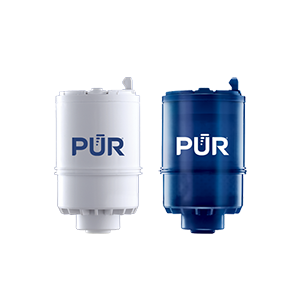
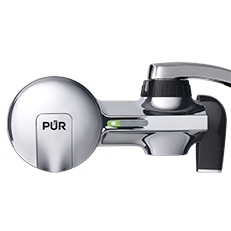
PUR & PUR PLUS FAUCET FILTERS
RF3375/RF9999

View Filters

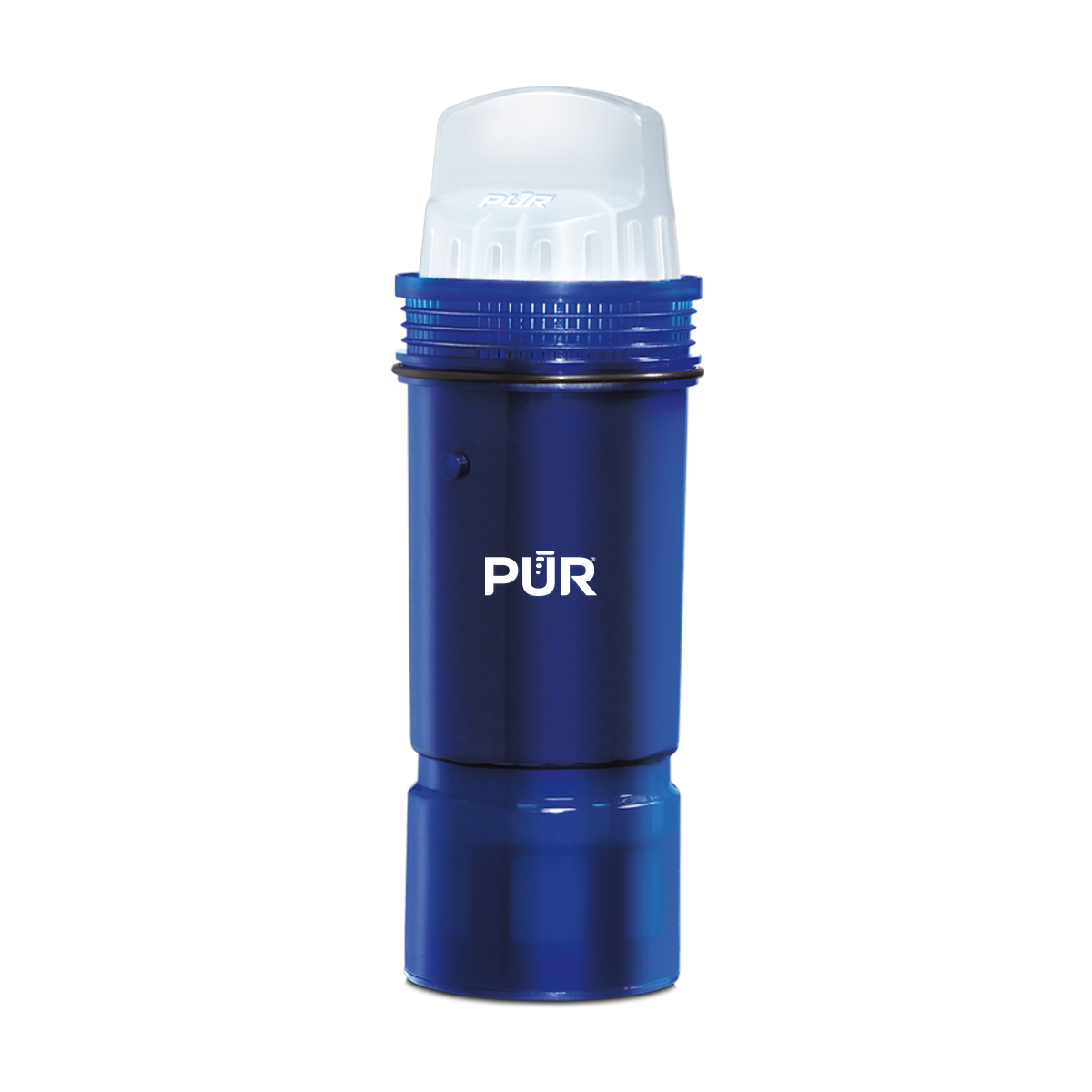
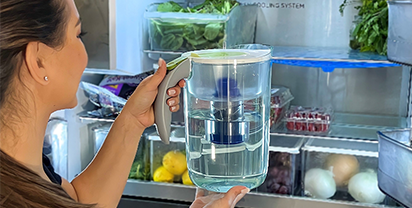
PUR PLUS PITCHER FILTERS
PPF951K

View Filter

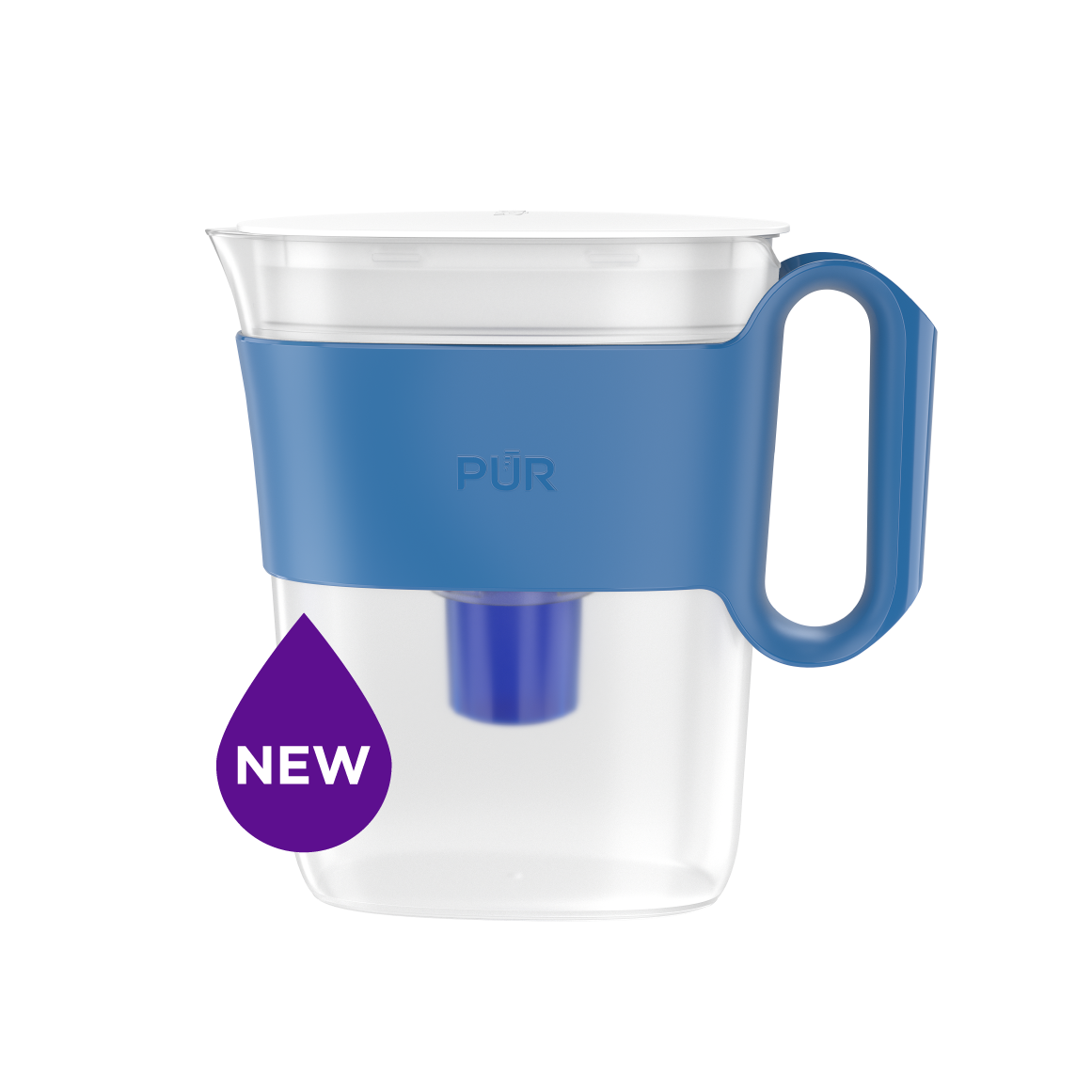
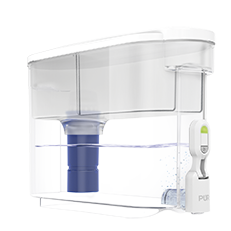
PUR BASIC PITCHER FILTERS
PPF900Z

View Filter


Vs. Brita*

Lead ✓ ✓
Microplastics ✓ ✓
Mercury ✓ ✓ ✓
Chlorine Taste & Odor ✓ ✓ ✓
DEET ✓
TTHM ✓

PUR’s Filtration Systems Are Certified By NSF And WQA For Their Contamination Reduction. WQA certifications as of 5/27/21 for Faucet filter models RF-3375 and RF-9999.

¹ Certified to reduce 10X more chemical and physical substances than Brita’s® leading pitcher filter.
² Certified to reduce 3X more chemical and physical substances than Brita’s® leading pitcher filter.
³ Certified to reduce 2X more chemical and physical substances than Brita’s® leading pitcher filter.
*Versus best-selling Brita® pitcher filter OB03. Brita® is a trademark of Brita LP.
**Like other leading brands, PUR does not filter microbes. As of 3/1/23 Brita® and ZeroWater® were not certified to filter microbes. Brita® is a trademark of Brita LP. ZeroWater® is a trademark of Zero Technologies, LLC..
 

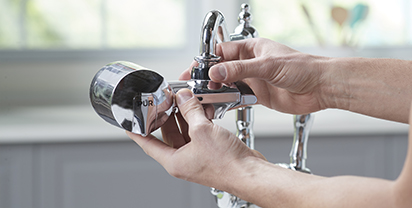
PUR & PUR PLUS FAUCET FILTERS


PUR & PUR PLUS FAUCET FILTERS
RF3375/RF9999

View Filters


Vs. Brita*

Lead ✓
Microplastics ✓
Mercury ✓
Chlorine Taste & Odor ✓
DEET ✓
TTHM ✓

PUR’s Filtration Systems Are Certified By NSF And WQA For Their Contamination Reduction. WQA certifications as of 5/27/21 for Faucet filter models RF-3375 and RF-9999.

¹ Certified to reduce 10X more chemical and physical substances than Brita’s® leading pitcher filter.
² Certified to reduce 3X more chemical and physical substances than Brita’s® leading pitcher filter.
³ Certified to reduce 2X more chemical and physical substances than Brita’s® leading pitcher filter.
*Versus best-selling Brita® pitcher filter OB03. Brita® is a trademark of Brita LP.
**Like other leading brands, PUR does not filter microbes. As of 3/1/23 Brita® and ZeroWater® were not certified to filter microbes. Brita® is a trademark of Brita LP. ZeroWater® is a trademark of Zero Technologies, LLC..


PUR PLUS PITCHER FILTERS


PUR PLUS PITCHER FILTERS
PPF951K

View Filter


Vs. Brita*

Lead ✓
Microplastics ✓
Mercury ✓
Chlorine Taste & Odor ✓
DEET
TTHM

PUR’s Filtration Systems Are Certified By NSF And WQA For Their Contamination Reduction. WQA certifications as of 5/27/21 for Faucet filter models RF-3375 and RF-9999.

¹ Certified to reduce 10X more chemical and physical substances than Brita’s® leading pitcher filter.
² Certified to reduce 3X more chemical and physical substances than Brita’s® leading pitcher filter.
³ Certified to reduce 2X more chemical and physical substances than Brita’s® leading pitcher filter.
*Versus best-selling Brita® pitcher filter OB03. Brita® is a trademark of Brita LP.
**Like other leading brands, PUR does not filter microbes. As of 3/1/23 Brita® and ZeroWater® were not certified to filter microbes. Brita® is a trademark of Brita LP. ZeroWater® is a trademark of Zero Technologies, LLC..


PUR BASIC PITCHER FILTERS


PUR BASIC PITCHER FILTERS
PPF900Z

View Filter


Vs. Brita*

Lead
Microplastics
Mercury ✓
Chlorine Taste & Odor ✓
DEET
TTHM

PUR’s Filtration Systems Are Certified By NSF And WQA For Their Contamination Reduction. WQA certifications as of 5/27/21 for Faucet filter models RF-3375 and RF-9999.

¹ Certified to reduce 10X more chemical and physical substances than Brita’s® leading pitcher filter.
² Certified to reduce 3X more chemical and physical substances than Brita’s® leading pitcher filter.
³ Certified to reduce 2X more chemical and physical substances than Brita’s® leading pitcher filter.
*Versus best-selling Brita® pitcher filter OB03. Brita® is a trademark of Brita LP.
**Like other leading brands, PUR does not filter microbes. As of 3/1/23 Brita® and ZeroWater® were not certified to filter microbes. Brita® is a trademark of Brita LP. ZeroWater® is a trademark of Zero Technologies, LLC..


What Are the Best Types of Inflatable Tents?

Inflatable tents replace many rigid poles with air-filled beams, making setup simpler for campers who want fewer parts to assemble. But the “best” design depends on where you camp, how many people share the space, and what weather you expect. The phrase “Aufblasbare Zelt” may appear in searches for these shelters, yet the key differences are practical: shape, usable floor area, beam layout, and ventilation. Small dome-style models suit short trips and compact pitches. Tunnel designs can offer generous sleeping and storage space, while family models often prioritize standing room and separate compartments.

Look beyond the silhouette. Check the manufacturer’s capacity guidance, packed weight, stated weather performance, and recommended inflation pressure. A broad vestibule is useful when muddy boots need a place to wait; mesh panels help on warm, still nights. Reliable valves and repair patches matter, too. A pump should be compatible with the tent’s fittings, and beams should be inflated only as directed. More air is not automatically better. In practice, a roomy tent may feel less convenient when its packed size strains a small car.

This guide compares common inflatable tent types and explains their trade-offs, so you can match a shelter to real camping needs rather than marketing claims. No single design wins. And published ratings cannot predict every gust, pitch, or downpour. Consider the ground, forecast, and your group’s comfort needs before choosing. A little caution helps; tent selection is rarely perfect on the first try.

What Are the Best Types of Inflatable Tents?

How Inflatable Tent Designs Differ

Inflatable tent designs differ mainly in how their air beams support the shelter. Tunnel tents use connected arches, creating long sleeping areas and useful headroom. Their shape suits campsites with room to pitch lengthwise. In gusty weather, careful orientation and secure anchoring matter. Dome designs cross beams near the top, giving a compact footprint and more balanced support. They can be easier to place on narrow pads, though curved walls may reduce usable space near the edges.

Some models add crossing beams or extra supports for a stiffer frame. That can help when wind picks up, but more chambers may mean more valves and setup steps. Simple designs are often quicker to inflate. Still, quick is not the same as effortless. Check the pump requirements, beam layout, and repair access before choosing. A low, streamlined shelter may handle exposed sites better, while a taller cabin-style design feels roomier for changing clothes or sitting out rain. The trade-off is easy to miss: more interior volume can catch more wind. Tent shape alone cannot guarantee stability; campsite exposure, anchoring, and inflation pressure all matter. One detail deserves a second look: comfort claims can be hard to judge from photos.

Lightweight Inflatable Tents for Backpacking

Lightweight Inflatable Tents for Backpacking

For backpacking, an inflatable tent can replace rigid poles with air-filled beams, reducing the number of parts to pack. Look for a model with a low packed weight, a compact stuff sack, and enough room for your sleeping gear. A solo tent may feel cramped when wet clothing and a pack come inside. Check the packed dimensions, not just the listed weight. Every gram matters on a long climb.

Pitching can be quick once you know the routine. Clear sharp stones and twigs from the groundsheet area, then inflate the beams evenly with a pump sack. Don’t overinflate; pressure can change with temperature. Practice at home first. An awkward first pitch can be frustrating. Ventilation matters too, since a small shelter can collect condensation overnight. Carry a compatible repair patch, and learn how to use it before a trip. Air beams can simplify setup, but they are not immune to punctures. That trade-off is easy to overlook when choosing by weight alone. On exposed routes, check the tent’s weather rating and secure every guyline, even when the forecast looks calm.

What Are the Best Types of Inflatable Tents? — Lightweight Inflatable Tents for Backpacking
Tent Type Typical Packed Weight* Best For Main Advantages Main Trade-Offs Backpacking Suitability
Single-Wall Air-Beam Tent About 1.5–2.5 kg (3.3–5.5 lb) for a compact 1–2 person shelter Trips where low weight and a simple setup are priorities Fewer separate components; the tent body and inflatable frame can be pitched together. Condensation can collect on the inner surface, particularly in humid or poorly ventilated conditions. Very good when ventilation and expected weather suit a single-wall design.
Double-Wall Air-Beam Tent About 2.0–3.5 kg (4.4–7.7 lb) for a compact 1–2 person shelter Backpackers wanting a separate inner tent and rainfly The rainfly helps keep condensation away from the sleeping area; the inner tent can offer extra ventilation. Usually heavier and bulkier than a comparable single-wall design, with more parts to pack. Good for comfort-focused trips where carrying a little extra weight is acceptable.
Tunnel Air-Beam Tent About 2.0–3.5 kg (4.4–7.7 lb) for a compact 1–2 person shelter Campers who value usable interior space and a roomy vestibule Can provide generous space for its footprint; air beams can simplify the frame compared with multiple rigid poles. Typically needs well-placed anchors and careful orientation; performance depends on pitching securely. Good on established campsites and routes where suitable anchoring ground is available.
Dome or Geodesic Air-Beam Tent About 2.5–4.0 kg (5.5–8.8 lb) for a compact 1–2 person shelter Exposed campsites and trips where a freestanding-style layout is useful Crossing frame members can create a stable structure; the shape can be easier to position on varied campsite layouts. More frame material and complex beam layouts can increase packed weight and setup steps. Moderate to good; consider it when stability and campsite flexibility matter more than minimum weight.
Hybrid Air-Beam Tent About 1.8–3.2 kg (4.0–7.1 lb) for a compact 1–2 person shelter Backpackers seeking a balance between inflatable support and a conventional frame element May combine air beams with short poles or other supports to shape the shelter while limiting the number of rigid poles. Designs vary considerably; check which parts are required for pitching and whether a repair kit is included. Good if the packed weight, setup method, and replacement or repair options suit the route.
*Weight ranges are broad estimates for compact 1–2 person designs, not specifications for a particular model. Actual packed weight varies with capacity, fabric, included accessories, and whether the pump, stakes, or repair kit are counted. For backpacking, compare trail weight, packed size, ventilation, anchoring requirements, and the availability of field repairs before choosing.

Spacious Inflatable Tents for Family Camping

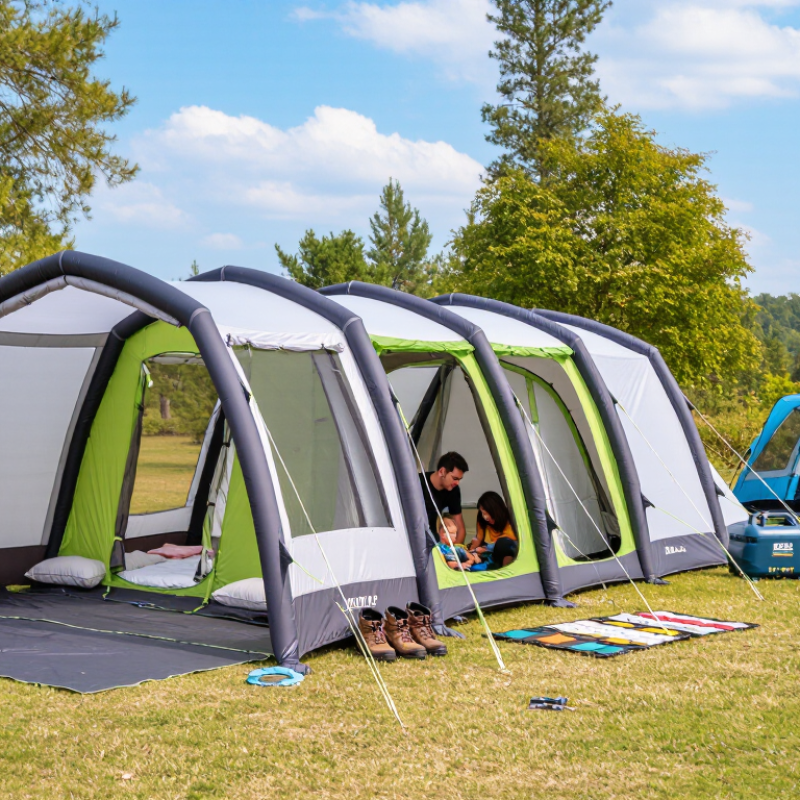
Spacious inflatable tents can give a family room to sleep, change, and store muddy boots without crowding the doorway. Look for a layout with separate sleeping areas and a central living space. A tent around six-person capacity may feel tight when six people bring full-size bags, so check the floor dimensions, not just the label. Measure your sleeping mats at home. Small details matter.

Inflatable beams can make pitching easier than assembling many poles, especially when children are waiting nearby. Still, allow space to spread out the tent and secure its guy lines. Follow the maker’s inflation guidance; overinflating can strain the beams, while too little air may leave the structure slack. Good ventilation also matters. Open mesh panels help reduce condensation, but keep airflow and weather protection balanced.

Tips: Practise pitching once in the garden before your trip. Pack a repair kit, a groundsheet sized for the tent, and a pump that fits its valves. Choose level ground, clear away sharp stones, and check the forecast before setting out. A roomy tent is not automatically comfortable in strong wind or heavy rain. I would leave extra space for wet clothes, though that can make the packed load heavier.

Compact Inflatable Tents for Touring and Festivals

Compact inflatable tents suit cyclists, walkers, and festival-goers who need shelter without carrying heavy poles. Most use air beams instead of rigid frames, so setup can be quick with a hand pump. Smaller dome designs are easy to pitch on tight festival plots, while short tunnel tents may offer more sleeping space for their packed size. Check the packed length before buying; a tent that fits a car boot may still be awkward on a touring bike. Every litre matters.

For weekend trips, look for a vestibule large enough for muddy shoes and a small bag. Good ventilation helps limit condensation, especially after a damp night with the doors closed. Check the stated weather rating and follow the maker’s inflation guidance; firmer beams are not automatically safer. The trade-off is real: compact models can feel cramped when rain keeps everyone inside. That can get old.

Tips: Practise pitching at home, and check the pump and valves before leaving. Choose a level spot, clear sharp debris, and keep vents open when conditions allow. A few minutes of preparation can prevent a frustrating arrival.

How to Choose an Inflatable Tent for Your Needs

What Are the Best Types of Inflatable Tents?
How to Choose an Inflatable Tent for Your Needs

Choose for your trip, not for a “best” label. A compact two-person model may suit short hikes if its packed weight works for your route. Larger air-beam shelters are often better for car camping, families, or longer stays. The Outdoor Industry Association’s 2024 Outdoor Participation Trends Report says 175.8 million Americans took part in outdoor recreation in 2023. That range of activities means different campers need different layouts. One easy mistake: buying by capacity alone.

Check packed dimensions, sleeping area, and vestibule space. Leave room for wet boots and bags, not just sleeping mats. For windy or rainy sites, look for sturdy guy-out points, a full-coverage rainfly, sealed seams, and clear wind guidance. Air beams can make pitching simpler, but they still need correct pressure and careful anchoring. A pump and repair sleeve are worth carrying. Test-pitch at home. Small detail, big payoff.

Match the design to your transport and weather. A roomy tunnel-style shelter can suit a drive-up site, while a lighter, lower-profile model is easier to carry and less exposed. Check valve access and replacement-tube availability. Read the packed weight carefully; “lightweight” may exclude the pump and pegs. A slightly awkward truth: capacity labels rarely show how cramped rainy mornings feel. If possible, compare the floor dimensions with your sleeping mats before buying.

How to read this: Scores are a practical, illustrative guide from 1 (less suited) to 5 (more suited), not standardized test results. Family air tents typically prioritize space and comfort; backpacking air tents prioritize portability; inflatable shelters and air-beam awnings are designed for group or campsite use. Check the capacity, packed weight, weather rating, and setup requirements of each model before choosing.