Contaminant Comparison Chart

For a complete list of contaminants that PUR filters reduce, please view our Performance Data Sheets here.


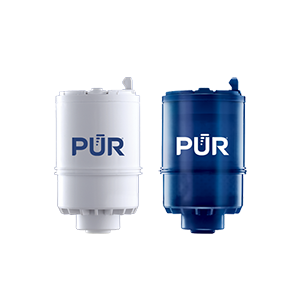
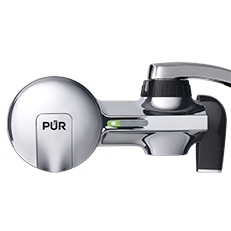
PUR & PUR PLUS FAUCET FILTERS
RF3375/RF9999

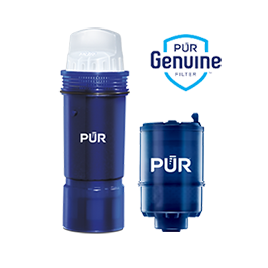
View Filters

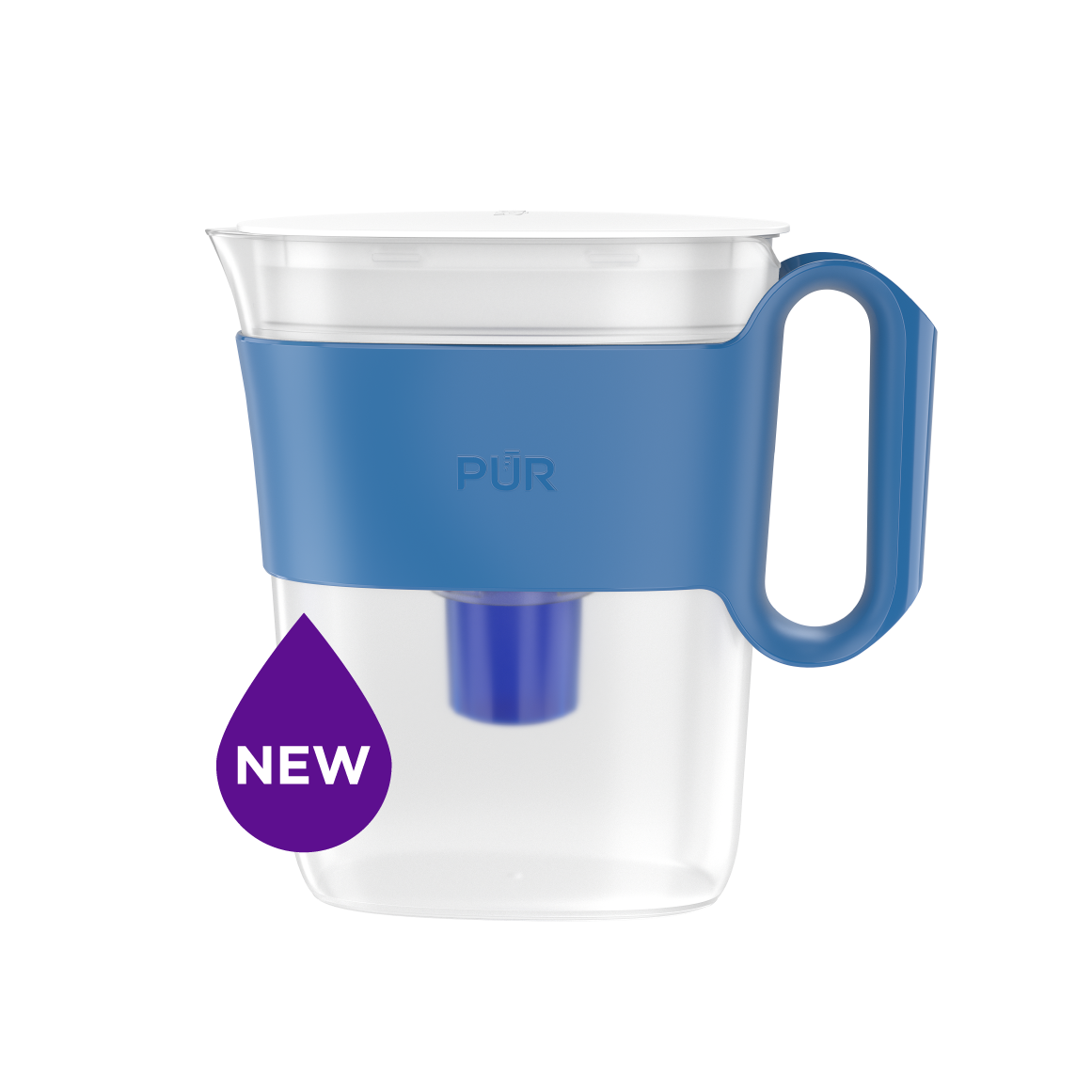
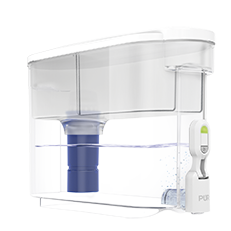
PUR PLUS PITCHER FILTERS
PPF951K

View Filter

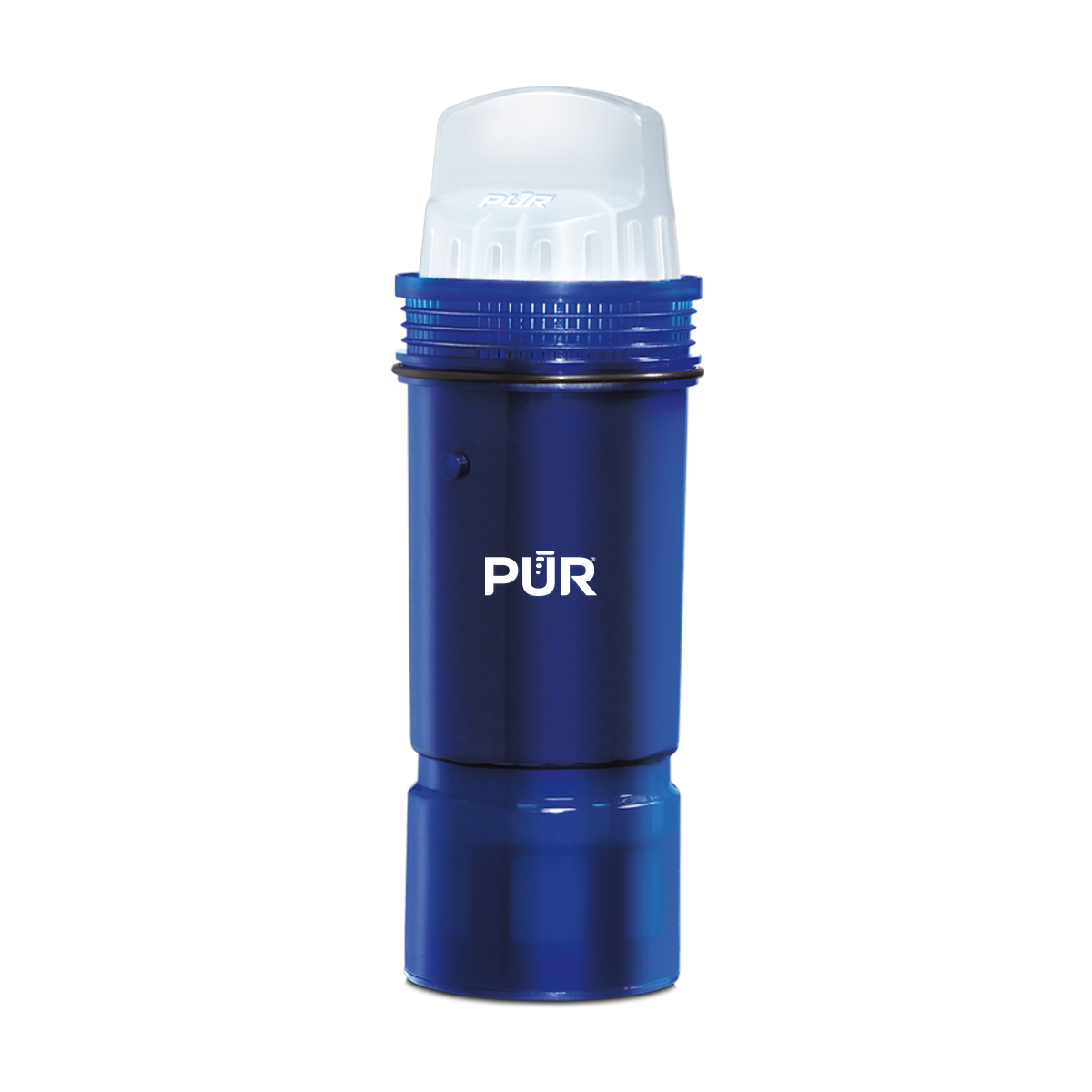
PUR BASIC PITCHER FILTERS
PPF900Z

View Filter


Vs. Brita*

Lead ✓ ✓
Microplastics ✓ ✓
Mercury ✓ ✓ ✓
Chlorine Taste & Odor ✓ ✓ ✓
DEET ✓
TTHM ✓

PUR’s Filtration Systems Are Certified By NSF And WQA For Their Contamination Reduction. WQA certifications as of 5/27/21 for Faucet filter models RF-3375 and RF-9999.

¹ Certified to reduce 10X more chemical and physical substances than Brita’s® leading pitcher filter.
² Certified to reduce 3X more chemical and physical substances than Brita’s® leading pitcher filter.
³ Certified to reduce 2X more chemical and physical substances than Brita’s® leading pitcher filter.
*Versus best-selling Brita® pitcher filter OB03. Brita® is a trademark of Brita LP.
**Like other leading brands, PUR does not filter microbes. As of 3/1/23 Brita® and ZeroWater® were not certified to filter microbes. Brita® is a trademark of Brita LP. ZeroWater® is a trademark of Zero Technologies, LLC..
 

PUR & PUR PLUS FAUCET FILTERS


PUR & PUR PLUS FAUCET FILTERS
RF3375/RF9999

View Filters


Vs. Brita*

Lead ✓
Microplastics ✓
Mercury ✓
Chlorine Taste & Odor ✓
DEET ✓
TTHM ✓

PUR’s Filtration Systems Are Certified By NSF And WQA For Their Contamination Reduction. WQA certifications as of 5/27/21 for Faucet filter models RF-3375 and RF-9999.

¹ Certified to reduce 10X more chemical and physical substances than Brita’s® leading pitcher filter.
² Certified to reduce 3X more chemical and physical substances than Brita’s® leading pitcher filter.
³ Certified to reduce 2X more chemical and physical substances than Brita’s® leading pitcher filter.
*Versus best-selling Brita® pitcher filter OB03. Brita® is a trademark of Brita LP.
**Like other leading brands, PUR does not filter microbes. As of 3/1/23 Brita® and ZeroWater® were not certified to filter microbes. Brita® is a trademark of Brita LP. ZeroWater® is a trademark of Zero Technologies, LLC..


PUR PLUS PITCHER FILTERS


PUR PLUS PITCHER FILTERS
PPF951K

View Filter


Vs. Brita*

Lead ✓
Microplastics ✓
Mercury ✓
Chlorine Taste & Odor ✓
DEET
TTHM

PUR’s Filtration Systems Are Certified By NSF And WQA For Their Contamination Reduction. WQA certifications as of 5/27/21 for Faucet filter models RF-3375 and RF-9999.

¹ Certified to reduce 10X more chemical and physical substances than Brita’s® leading pitcher filter.
² Certified to reduce 3X more chemical and physical substances than Brita’s® leading pitcher filter.
³ Certified to reduce 2X more chemical and physical substances than Brita’s® leading pitcher filter.
*Versus best-selling Brita® pitcher filter OB03. Brita® is a trademark of Brita LP.
**Like other leading brands, PUR does not filter microbes. As of 3/1/23 Brita® and ZeroWater® were not certified to filter microbes. Brita® is a trademark of Brita LP. ZeroWater® is a trademark of Zero Technologies, LLC..


PUR BASIC PITCHER FILTERS


PUR BASIC PITCHER FILTERS
PPF900Z

View Filter


Vs. Brita*

Lead
Microplastics
Mercury ✓
Chlorine Taste & Odor ✓
DEET
TTHM

PUR’s Filtration Systems Are Certified By NSF And WQA For Their Contamination Reduction. WQA certifications as of 5/27/21 for Faucet filter models RF-3375 and RF-9999.

¹ Certified to reduce 10X more chemical and physical substances than Brita’s® leading pitcher filter.
² Certified to reduce 3X more chemical and physical substances than Brita’s® leading pitcher filter.
³ Certified to reduce 2X more chemical and physical substances than Brita’s® leading pitcher filter.
*Versus best-selling Brita® pitcher filter OB03. Brita® is a trademark of Brita LP.
**Like other leading brands, PUR does not filter microbes. As of 3/1/23 Brita® and ZeroWater® were not certified to filter microbes. Brita® is a trademark of Brita LP. ZeroWater® is a trademark of Zero Technologies, LLC..


How to Choose an Energy Ceramics Supplier?

Choosing an Energy Ceramics supplier is not just a price comparison. The right partner must understand the component’s operating conditions, production limits, and inspection needs. A ceramic part beside a high-temperature process may face thermal cycling, electrical stress, abrasion, or chemical exposure. Small differences in material grade and machining can affect its service life. Details matter.

Start with the application, not a catalogue. Share operating temperature, load, dimensions, tolerances, and expected production volume. Then ask suppliers to explain why a material such as alumina, zirconia, or silicon carbide fits those conditions. A confident answer should include relevant data, not just broad claims. Request material certificates, inspection records, and samples when practical. Check how the supplier controls batches and handles dimensional variation. Ask who reviews drawings and resolves production issues. Specific answers build confidence.

Experience is useful, but it is not proof by itself. Look for comparable projects, clear quality procedures, and realistic delivery commitments. A sample that performs well in a brief test may still behave differently after repeated heating or long-term use. Test under conditions close to your own. No supplier can remove every risk. Even a careful selection may need revision after field feedback. That is worth admitting. This guide outlines practical questions for comparing Energy Ceramics suppliers, checking technical fit, and weighing quality against cost without treating the lowest quote as the safest choice.

How to Choose an Energy Ceramics Supplier?

Define the Application and Operating Conditions

Define the application before requesting a quote. A kiln setter, furnace lining, and electrolysis component face different heat, load, and chemical conditions. The European Commission’s 2007 Ceramic Manufacturing Industry BREF reports firing temperatures of roughly 800–2,000°C across ceramic product types. That range is broad for a reason: the operating profile matters as much as the peak temperature. Record continuous temperature, short-term peaks, heating and cooling rates, and cycle frequency.

Describe the atmosphere, too. Oxygen, steam, hydrogen, or corrosive vapours can change which ceramic performs reliably. Add mechanical details: contact pressure, vibration, abrasion, part dimensions, and acceptable distortion. Small details matter. The U.S. Department of Energy’s 2022 Industrial Decarbonization Roadmap estimates that industry accounts for about 30% of U.S. energy-related emissions, making heat efficiency and component life practical purchasing concerns. Ask suppliers to assess samples under conditions that match your process, not only standard datasheet tests. A specification may still miss an unexpected shutdown or uneven heating; note these uncertainties and revisit them after operating data becomes available.

How to Choose an Energy Ceramics Supplier? - Define the Application and Operating Conditions
Application Operating conditions to define Ceramic materials to evaluate Key properties to compare Supplier questions and evidence
Electrical insulation
Insulators, feedthroughs, and supports
Voltage and frequency; operating temperature; humidity; electrical clearance; exposure to dust, oil, or chemicals. Alumina for demanding strength and insulation needs; steatite for suitable lower-cost insulating components; zirconia where high strength or wear resistance is also required. Dielectric strength, volume resistivity, dielectric loss, dimensional stability, and performance after exposure to the service environment. Request grade-specific electrical data and test methods. Confirm tolerances, creepage-related design constraints, and whether parts are tested in conditions representative of service.
High-temperature insulation or furnace components
Supports, tubes, and kiln furniture
Continuous and peak temperature; atmosphere (air, vacuum, or reducing); heating and cooling rates; load; thermal cycling; contact with vapors or deposits. High-alumina ceramics for many hot-zone applications; silicon carbide where thermal conductivity and thermal-shock behavior are important; silicon nitride for selected high-temperature structural applications. Maximum recommended service temperature for the specific atmosphere, creep or load resistance, thermal expansion, thermal conductivity, and resistance to thermal shock. Ask for application-specific temperature limits, atmosphere compatibility, and thermal-cycle guidance. Verify that quoted limits account for mechanical load and component geometry.
Wear parts in pumps, valves, and energy processing
Seals, liners, and nozzles
Slurry or fluid composition; particle size and hardness; velocity; pressure; temperature; lubrication; impact and abrasion conditions. Alumina for many abrasive-wear applications; zirconia where toughness and strength are priorities; silicon carbide for suitable abrasive, corrosive, or high-thermal-conductivity duties. Hardness, fracture toughness, wear rate under comparable test conditions, corrosion resistance, surface finish, and fit with mating components. Request wear-test details and the test medium, load, and method. Confirm chemical compatibility, achievable surface finish, and inspection criteria for critical dimensions.
Thermal management and heat-exposed components
Heat exchangers, radiant tubes, and fixtures
Heat flux; temperature gradients; fluid or gas chemistry; pressure; thermal cycling; required electrical conductivity or insulation. Silicon carbide for applications benefiting from high thermal conductivity; alumina for electrically insulating components; silicon nitride for selected parts requiring a combination of strength and thermal-shock resistance. Thermal conductivity, coefficient of thermal expansion, strength at operating temperature, oxidation or corrosion behavior, and joint or seal compatibility. Ask for property data at relevant temperatures, not only room-temperature values. Review joining, sealing, and thermal-cycle test results for the proposed design.
Molten-metal or chemically aggressive service
Protection tubes, nozzles, and process components
Metal or chemical composition; temperature; atmosphere; immersion time; flow rate; thermal cycling; contamination limits. Material selection depends strongly on the molten material and chemistry; alumina, silicon carbide, and other technical ceramics may be suitable in specific environments. Wetting behavior, chemical corrosion or dissolution rate, thermal shock resistance, porosity, purity, and risk of contaminating the process. Provide the exact process chemistry and duty cycle. Request compatibility data for that environment and clarify whether the evidence comes from testing or field experience.
Machined or custom energy-system components
Complex shapes, close tolerances, and assemblies
Part dimensions; load direction; mounting method; fit and clearance; production volume; inspection needs; expected service life. Choose the material after defining functional requirements; common options include alumina, zirconia, silicon carbide, and silicon nitride, each with different property and manufacturing trade-offs. Strength distribution, dimensional tolerance, surface finish, edge condition, porosity, batch consistency, and machinability in the required geometry. Request a drawing review, material and process traceability, sample-part inspection data, and a documented quality plan. Confirm how changes to material or process are controlled.

Note: Ceramic properties and service limits vary by composition, grade, manufacturing route, component geometry, and operating environment. Compare supplier data using the same test methods and verify suitability under the actual application conditions.

Identify Required Ceramic Properties and Industry Standards

How to Choose an Energy Ceramics Supplier? Identify Required Ceramic Properties and Industry Standards

Start with the actual operating conditions, not a supplier’s headline temperature rating. Record continuous and peak temperatures, heating and cooling rates, mechanical loads, atmosphere, and expected service life. A furnace support exposed to repeated thermal cycling needs different properties from an insulating tile. Thermal conductivity, thermal expansion, strength, fracture toughness, porosity, and chemical resistance may all matter. Small details matter.

The U.S. Department of Energy’s 2022 Industrial Decarbonization Roadmap estimates that process heating accounts for roughly half of manufacturing energy use. That makes insulation performance and component longevity important selection factors. But a higher maximum temperature does not automatically mean lower energy use. Check test conditions and compare like with like.

Ask suppliers for test results tied to recognized methods, such as ASTM C1161 for flexural strength or ASTM C1421 for fracture toughness in advanced ceramics. ISO 18754 provides methods for measuring density and apparent porosity in fine ceramics. Standards define how properties are measured; they do not set one universal acceptance limit. Specify your required values, test conditions, and batch traceability. Review sample certificates, not just a polished datasheet. One easy-to-miss point: small variations in porosity can affect both strength and insulation. Supplier claims deserve a careful second look.

Assess the Supplier’s Manufacturing and Quality Capabilities

An energy ceramics supplier should be able to explain how raw materials become finished components. Ask about powder preparation, forming methods, firing schedules, and machining tolerances. These details affect density, dimensions, and performance under heat or electrical stress. Keep the discussion practical. Request examples of inspection records, not just a general quality statement. A useful record links a batch number to material checks, furnace conditions, and final measurements.

Look closely at how the supplier tests parts. Depending on the application, checks may include dimensions, porosity, thermal cycling, dielectric strength, or visual defects. Ask how often tests are performed and what happens when a result falls outside specification. Sample parts can help, but test them under conditions close to your own operating environment. A polished sample is not proof of consistent production. Nor is a certificate enough on its own. During a facility visit, observe how materials are stored and how operators handle inspection tools. Small gaps can matter. Still, one audit cannot reveal everything; production conditions may change between visits. A clear process for documenting changes and notifying customers is therefore worth discussing before an order is placed.

How to Choose an Energy Ceramics Supplier?

Assess the Supplier’s Manufacturing and Quality Capabilities

The 1–5 scores are illustrative rubric values, not measured data from specific suppliers. Evaluate each capability using documented evidence, such as audit records, process controls, material traceability, test reports, capacity plans, and corrective-action records.

Compare Technical Support, Lead Times, and Supply Reliability

How to Choose an Energy Ceramics Supplier?

A supplier’s technical support should extend beyond sending a datasheet. Ask how its engineers handle changes in operating temperature, part geometry, or thermal cycling. For example, a small difference in wall thickness can affect heat flow and service life. Request test methods, material tolerances, and lot-level traceability before comparing prices. A useful technical contact can explain trade-offs plainly and review a drawing with your team. Vague answers are a warning. Still, no supplier can predict every condition inside your equipment, so confirm assumptions with application-specific testing.

Lead times need the same careful review. Separate sample delivery from repeat production, and ask what happens when demand rises unexpectedly. A quoted six-week schedule means little if tooling, inspection, or raw-material availability is excluded. That matters. Check recent delivery performance and whether the supplier alerts customers before changing a process or material source. Ask about backup capacity, too. A backup plan sounds reassuring, but it may not protect your exact grade or dimensions. Request realistic dates in writing, then compare them with your own inventory needs. I would leave some room for delays; tight schedules look efficient on paper, yet one missed shipment can stop a production line.

Evaluate Total Cost and Confirm Supplier Fit

How to Choose an Energy Ceramics Supplier?

Evaluate Total Cost and Confirm Supplier Fit

A low unit price can hide expensive machining, slow delivery, or inconsistent firing results. Compare landed cost, usable yield, inspection time, and replacement frequency—not just the quote. The International Energy Agency’s Energy Efficiency 2023 report estimates industry uses about 37% of global energy. For energy ceramics, operating temperature and thermal cycling can therefore affect costs well beyond the purchase order. Ask suppliers for test conditions and measured performance, not only a product data sheet.

Build a cost model around your actual process. Include sample testing, tooling, freight, scrap, and the labor needed to inspect each batch. The U.S. Department of Energy’s Industrial Decarbonization Roadmap puts industry at roughly one-third of U.S. energy use, underscoring why process efficiency deserves attention. Still, a theoretical efficiency gain is not a saving until your equipment confirms it. This is where a spreadsheet can mislead us.

Check fit with a trial batch. Measure dimensions, density, thermal-shock performance, and variation across pieces. Confirm the supplier can reproduce the agreed specification and share traceable test records. Discuss realistic lead times, production capacity, and how defects are handled. A polished presentation helps, but it cannot replace consistent parts on your line. Ask for evidence, then verify it under your own operating conditions.