




Contaminant Comparison Chart

For a complete list of contaminants that PUR filters reduce, please view our Performance Data Sheets here.


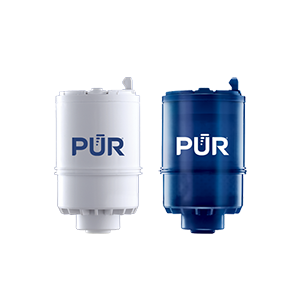
PUR & PUR PLUS FAUCET FILTERS
RF3375/RF9999

View Filters

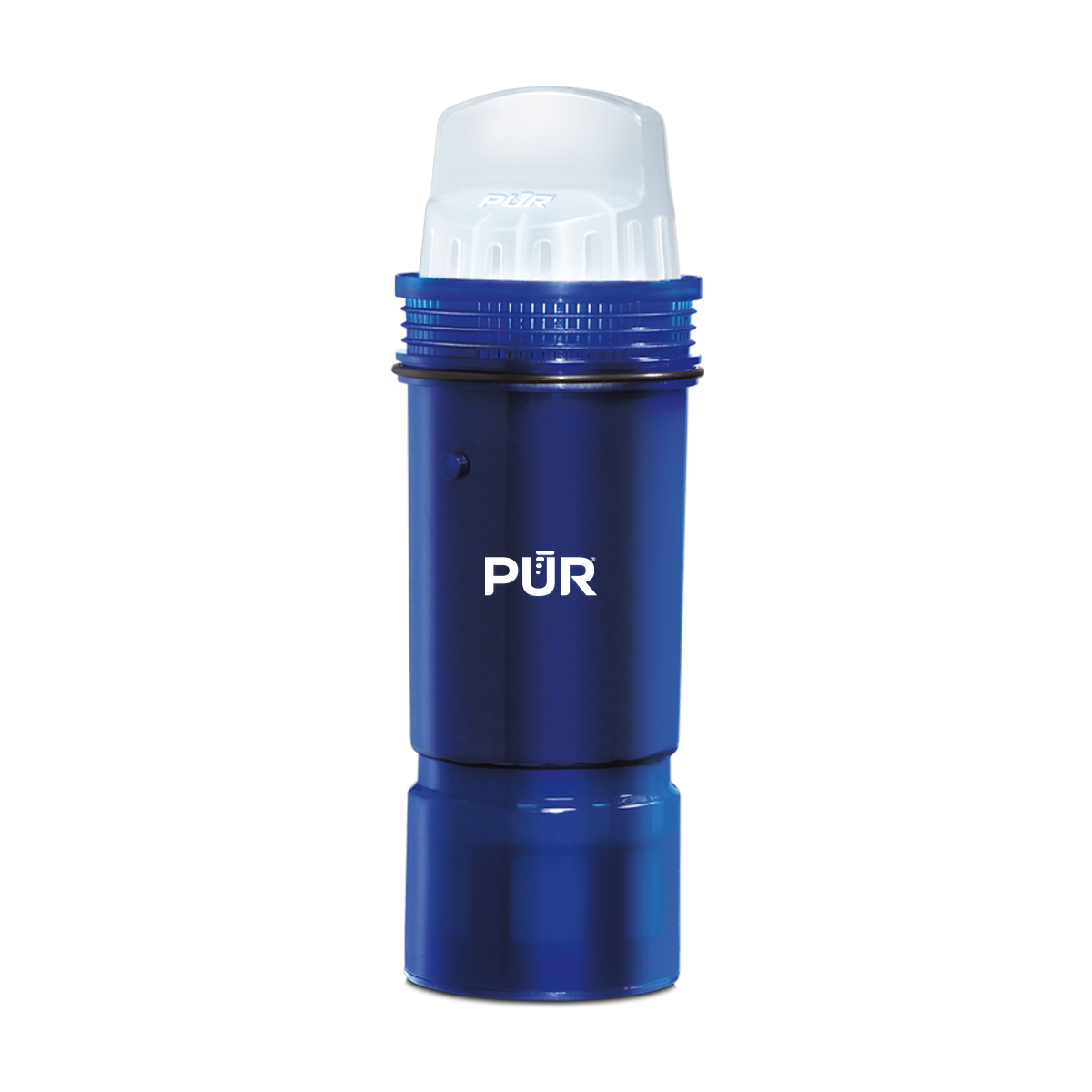
PUR PLUS PITCHER FILTERS
PPF951K

View Filter

PUR BASIC PITCHER FILTERS
PPF900Z

View Filter


Vs. Brita*

Lead ✓ ✓
Microplastics ✓ ✓
Mercury ✓ ✓ ✓
Chlorine Taste & Odor ✓ ✓ ✓
DEET ✓
TTHM ✓

PUR’s Filtration Systems Are Certified By NSF And WQA For Their Contamination Reduction. WQA certifications as of 5/27/21 for Faucet filter models RF-3375 and RF-9999.

¹ Certified to reduce 10X more chemical and physical substances than Brita’s® leading pitcher filter.
² Certified to reduce 3X more chemical and physical substances than Brita’s® leading pitcher filter.
³ Certified to reduce 2X more chemical and physical substances than Brita’s® leading pitcher filter.
*Versus best-selling Brita® pitcher filter OB03. Brita® is a trademark of Brita LP.
**Like other leading brands, PUR does not filter microbes. As of 3/1/23 Brita® and ZeroWater® were not certified to filter microbes. Brita® is a trademark of Brita LP. ZeroWater® is a trademark of Zero Technologies, LLC..
 

PUR & PUR PLUS FAUCET FILTERS


PUR & PUR PLUS FAUCET FILTERS
RF3375/RF9999

View Filters


Vs. Brita*

Lead ✓
Microplastics ✓
Mercury ✓
Chlorine Taste & Odor ✓
DEET ✓
TTHM ✓

PUR’s Filtration Systems Are Certified By NSF And WQA For Their Contamination Reduction. WQA certifications as of 5/27/21 for Faucet filter models RF-3375 and RF-9999.

¹ Certified to reduce 10X more chemical and physical substances than Brita’s® leading pitcher filter.
² Certified to reduce 3X more chemical and physical substances than Brita’s® leading pitcher filter.
³ Certified to reduce 2X more chemical and physical substances than Brita’s® leading pitcher filter.
*Versus best-selling Brita® pitcher filter OB03. Brita® is a trademark of Brita LP.
**Like other leading brands, PUR does not filter microbes. As of 3/1/23 Brita® and ZeroWater® were not certified to filter microbes. Brita® is a trademark of Brita LP. ZeroWater® is a trademark of Zero Technologies, LLC..


PUR PLUS PITCHER FILTERS


PUR PLUS PITCHER FILTERS
PPF951K

View Filter


Vs. Brita*

Lead ✓
Microplastics ✓
Mercury ✓
Chlorine Taste & Odor ✓
DEET
TTHM

PUR’s Filtration Systems Are Certified By NSF And WQA For Their Contamination Reduction. WQA certifications as of 5/27/21 for Faucet filter models RF-3375 and RF-9999.

¹ Certified to reduce 10X more chemical and physical substances than Brita’s® leading pitcher filter.
² Certified to reduce 3X more chemical and physical substances than Brita’s® leading pitcher filter.
³ Certified to reduce 2X more chemical and physical substances than Brita’s® leading pitcher filter.
*Versus best-selling Brita® pitcher filter OB03. Brita® is a trademark of Brita LP.
**Like other leading brands, PUR does not filter microbes. As of 3/1/23 Brita® and ZeroWater® were not certified to filter microbes. Brita® is a trademark of Brita LP. ZeroWater® is a trademark of Zero Technologies, LLC..


PUR BASIC PITCHER FILTERS


PUR BASIC PITCHER FILTERS
PPF900Z

View Filter


Vs. Brita*

Lead
Microplastics
Mercury ✓
Chlorine Taste & Odor ✓
DEET
TTHM

PUR’s Filtration Systems Are Certified By NSF And WQA For Their Contamination Reduction. WQA certifications as of 5/27/21 for Faucet filter models RF-3375 and RF-9999.

¹ Certified to reduce 10X more chemical and physical substances than Brita’s® leading pitcher filter.
² Certified to reduce 3X more chemical and physical substances than Brita’s® leading pitcher filter.
³ Certified to reduce 2X more chemical and physical substances than Brita’s® leading pitcher filter.
*Versus best-selling Brita® pitcher filter OB03. Brita® is a trademark of Brita LP.
**Like other leading brands, PUR does not filter microbes. As of 3/1/23 Brita® and ZeroWater® were not certified to filter microbes. Brita® is a trademark of Brita LP. ZeroWater® is a trademark of Zero Technologies, LLC..


Top 10 3D Wall Panel Manufacturers in China

China’s 3d Wall Panel market serves projects ranging from hotel lobbies to compact apartment renovations. Buyers compare more than appearance. They check substrate consistency, surface finish, panel weight, installation method, and delivery reliability. A textured sample under warm showroom lighting can look different beside a real window. Small details matter.

Grand View Research’s wall panels market coverage offers useful context on market direction and product categories. However, broad wall-panel data should not be mistaken for a dedicated 3D panel sales count. That distinction matters. This overview therefore focuses on practical supplier factors rather than unsupported market-size claims: product range, material options, manufacturing capability, customization, quality documentation, and export experience. These points help readers compare manufacturers, but they cannot replace sample testing or factory verification.

Building researcher Stewart Brand wrote, “A building is not something you finish. A building is something you start.” His observation concerns buildings, not 3d Wall Panel products specifically, but it captures a useful idea: interior surfaces must work after installation, not just in a catalogue. The manufacturers below are considered through that longer view. Their panels may differ in relief depth, edge accuracy, coating, and installation support. Some differences are easy to photograph. Others only become clear during fitting. This list is a starting point, not a guarantee; supplier claims deserve careful checking.

Top 10 3D Wall Panel Manufacturers in China

Understanding 3D Wall Panels and Their Applications

Three-dimensional wall panels use raised patterns to add depth, texture, and visual rhythm to a flat wall. Common materials include gypsum, wood, PVC, and plant-fiber composites; each differs in weight, moisture tolerance, finish, and maintenance needs. The pattern may be geometric, softly waved, or deeply sculpted. Small details matter.

Their applications range from hotel lobbies and retail displays to living rooms, offices, and reception areas. A shallow pattern can add interest behind a bed without dominating the room. Deeper relief creates stronger shadows, especially beside windows or under directional lighting. That effect can also reveal dust and uneven installation more clearly.

Before choosing a panel, consider the wall substrate, room humidity, cleaning routine, and how edges will meet corners or outlets. A full-size sample helps show how color and shadows change in the actual room. It is easy to overestimate a dramatic pattern from a small sample; some designs can feel busy across a whole wall. Check product specifications and installation guidance, since suitability varies by material and intended setting.

Overview of China’s 3D Wall Panel Manufacturing Industry

Top 10 3D Wall Panel Manufacturers in China
Overview of China’s 3D Wall Panel Manufacturing Industry

China’s 3D wall panel industry serves residential, commercial, and hospitality projects with varied textures, finishes, and panel sizes. Manufacturers may work with PVC, wood-based boards, gypsum, or other materials, each suited to different settings. Production often combines molded patterns with cutting, coating, and custom packaging. Details matter. A crisp sample can still look different under warm lighting or across a full wall, so buyers should assess more than catalog photos.

The market includes factories focused on high-volume orders and workshops offering more customized designs. This range can make sourcing flexible, but quality checks need to be specific. Ask about panel thickness, edge consistency, backing structure, installation methods, and tolerances between batches. For projects with moisture, fire, or indoor-air requirements, request current test documents and confirm they match the intended market. Requirements vary. Product claims alone are not enough, and documentation may need independent review.

Tips: Request physical samples and test the proposed adhesive or fixing system on the actual wall surface. Check how seams appear from several viewing angles. Clarify minimum order quantities, lead times, packaging protection, and replacement procedures before production. One weakness in many buying plans is treating finish selection as the main decision; substrate stability and installation conditions matter just as much.

Top 10 3D Wall Panel Manufacturers in China - Overview of China’s 3D Wall Panel Manufacturing Industry

Panel Category Common Manufacturing Route Typical Characteristics Common Applications Key Purchasing Considerations
PVC panels Profile extrusion, followed by cutting and surface finishing Lightweight and available in a range of embossed or printed finishes; performance depends on the formulation and construction. Interior feature walls and selected commercial interiors Check panel thickness, surface finish, fire-performance documentation, and suitability for the intended environment.
Wood-plastic composite (WPC) panels Compounding wood-based filler with thermoplastic material, then extrusion or molding Combines wood-like appearance options with a polymer-based matrix; composition and performance vary by product. Interior decorative walls and, where specified for the purpose, some semi-outdoor uses Confirm the material composition, moisture-use limits, installation system, and applicable test reports.
Gypsum panels Gypsum slurry casting or molding, followed by drying and finishing Can form detailed relief patterns; gypsum products may be brittle and require careful handling. Interior feature walls and decorative wall treatments Review panel dimensions, edge details, fixing method, weight, and any tested fire classification.
MDF relief panels Machining, routing, pressing, or profiling fiberboard, often with a decorative coating Supports precise patterned surfaces and paint or veneer finishes; moisture resistance depends on the board grade and finish. Interior walls in dry, controlled environments Specify board grade, coating, edge treatment, formaldehyde-emission documentation, and moisture limitations.
Bamboo- or wood-fiber composite panels Fiber preparation and compounding, followed by extrusion, molding, or pressing depending on the product Often offered with decorative surface textures; ingredients, binders, and properties vary between product lines. Interior decorative walls and renovation projects Request a full material specification and verify fire, emissions, and moisture-performance claims against test documents.
Polystyrene (PS) panels Foam or solid-profile extrusion, molding, and surface finishing Lightweight options are available; impact resistance and surface durability depend on panel design and finish. Interior decorative accents and lightweight wall features Check whether the product is foam or solid, its installation requirements, and its tested fire performance.
Polyurethane (PU) panels Material metering and molding or casting into relief designs, followed by finishing Can reproduce detailed decorative profiles; density, coating, and durability vary by specification. Interior decorative features and ornamental wall details Confirm dimensions, coating compatibility, fixing method, and suitability for the project’s fire and building-code requirements.
Natural wood panels Timber drying, cutting, machining, and application of a protective or decorative finish Natural grain and color variation are inherent; movement can occur as humidity changes. Interior feature walls and architectural finishes Ask about wood species, moisture conditioning, finish, responsible sourcing documentation, and installation acclimation.
Metal panels Sheet cutting, stamping, roll forming, or other metal-forming processes, followed by coating when specified Offers rigid surfaces and crisp formed patterns; weight, corrosion resistance, and appearance depend on metal and finish. Commercial interiors and architectural feature walls Specify metal type, thickness, coating system, edge treatment, and fixing details for the installation environment.
Fiber-cement panels Fiber-cement slurry forming and curing; exact production methods vary by manufacturer and product Rigid panel options are available for specified interior or exterior uses; cutting and installation require appropriate procedures. Applications defined by the product’s tested specification, including some wall cladding systems Verify intended-use approval, panel weight, cutting guidance, fixing system, and relevant fire and weathering test data.

Note: This table summarizes common 3D wall-panel material categories and manufacturing routes; it is not a ranked list of companies. Product properties and compliance depend on the specific specification and independently verifiable test documentation.

Key Criteria for Evaluating 3D Wall Panel Manufacturers

A 3D wall panel may look impressive in a showroom, yet small production differences can change the finished wall. When evaluating manufacturers in China, request samples from current production, not only display pieces. Check whether raised patterns are crisp, panel edges align, and colors stay consistent across several units. Details matter.

Material and process records help separate reliable suppliers from polished sales presentations. Ask for the panel composition, thickness tolerance, surface-finish options, and care instructions. For projects with specific moisture or fire-performance needs, request relevant test reports and confirm they match the exact product being quoted. A report for a different panel is not enough. Ask for evidence.

Production control matters just as much as design. Find out how the factory checks molds, dimensions, and surface defects, and whether it keeps inspection records by batch. Request realistic lead times, minimum order quantities, and details on protective packaging. If possible, inspect a sample shipment for chipped corners or crushed edges. These checks take time, and they can feel fussy; still, replacing damaged panels can cost more.

Communication is another useful measure. Ask how the supplier handles drawing revisions, custom colors, and quality complaints. Clear answers are reassuring, but verify important claims in writing. One weakness in this process: samples rarely reveal every issue that appears in a full order. Balance sample review with documented quality controls and references for comparable projects.

Top 10 3D Wall Panel Manufacturers in China

China has a broad market for 3D wall panel manufacturing, serving residential, retail, and hospitality projects. A useful Top 10 comparison should look beyond polished catalog photos. Check each manufacturer’s material options, pattern range, production capacity, and documented quality controls. Ask whether panels are made from PVC, wood-based materials, gypsum, or another substrate, since weight and installation needs differ. Request current product data sheets and samples before making a decision.

Tips: Compare the same details across suppliers. Ask for panel dimensions, thickness, surface finish, packing method, and typical lead time. Inspect a sample under the lighting planned for the room; shallow grooves can disappear in dim spaces, while deep relief may collect dust. Confirm how corners and cut edges should be finished. Small details matter.

A reliable shortlist also considers communication and consistency. Ask how color variation is managed between batches, and whether the factory can share inspection records or production photos for a similar order. Clarify who handles sample approval and how changes are documented. One point is easy to miss: a dramatic pattern may look excellent on one panel but feel crowded across a full wall. I would not judge from images alone; they can hide uneven edges. Compare physical samples, installation guidance, and realistic project requirements before ranking the manufacturers.

3D Wall Panel Materials: Typical Density Ranges

A material-level reference for comparing common 3D wall panel options when evaluating manufacturers in China. Values are approximate densities in kg/m³; actual specifications vary by product and formulation.

Ranges shown: polyurethane foam, 30–60; MDF, 600–800; gypsum, 800–1,200; WPC, 1,100–1,400; rigid PVC, 1,300–1,450 kg/m³. Check each supplier’s technical datasheet for product-specific values.

Comparing Materials, Designs, and Manufacturing Capabilities

Comparing Chinese 3D wall panel manufacturers starts with the material, not the surface pattern. PVC and other polymer panels are lightweight and easy to shape, while gypsum and mineral-based options offer a denser, more solid feel. Wood-based panels bring visible grain but need careful moisture control. Looks matter. But so does repeatability. Ask for panel weight, thickness tolerance, surface-finish samples, and test results for fire and acoustic performance. The UNEP and GlobalABC Global Status Report for Buildings and Construction 2023 estimates that buildings used 34% of global energy and produced 37% of energy- and process-related carbon emissions in 2022. Material selection is therefore more than a style decision.

Design capability shows in the details: crisp relief edges, consistent depth, clean corners, and patterns that align across several panels. A dramatic sample may conceal uneven production. Request a run of panels, not just one display piece, and inspect joints under side lighting. Manufacturing comparisons should cover mold-making, CNC or other forming methods, finishing, quality checks, and the ability to maintain color between batches. The World Green Building Council’s 2019 Bringing Embodied Carbon Upfront report attributes about 11% of global carbon emissions to materials and construction. That figure is broad, not panel-specific. Still, it makes recycled content, material yield, and packaging worth asking about. A supplier’s answers may be incomplete; note the gaps, too.