Contaminant Comparison Chart

For a complete list of contaminants that PUR filters reduce, please view our Performance Data Sheets here.


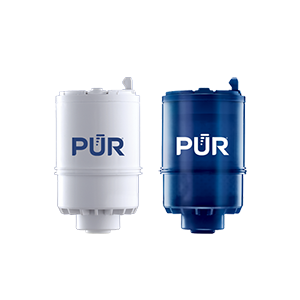
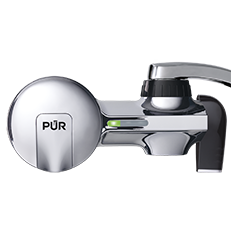
PUR & PUR PLUS FAUCET FILTERS
RF3375/RF9999

View Filters

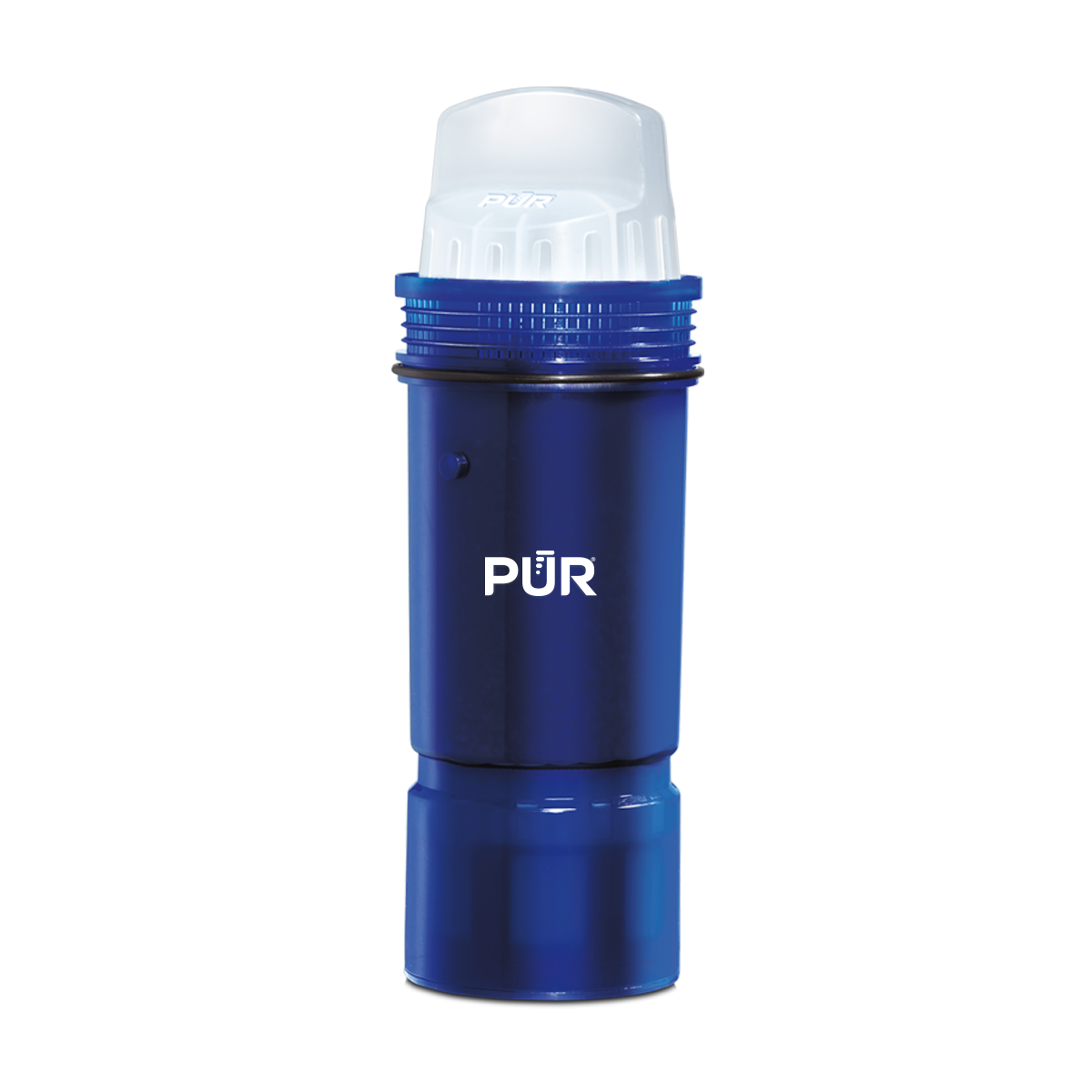
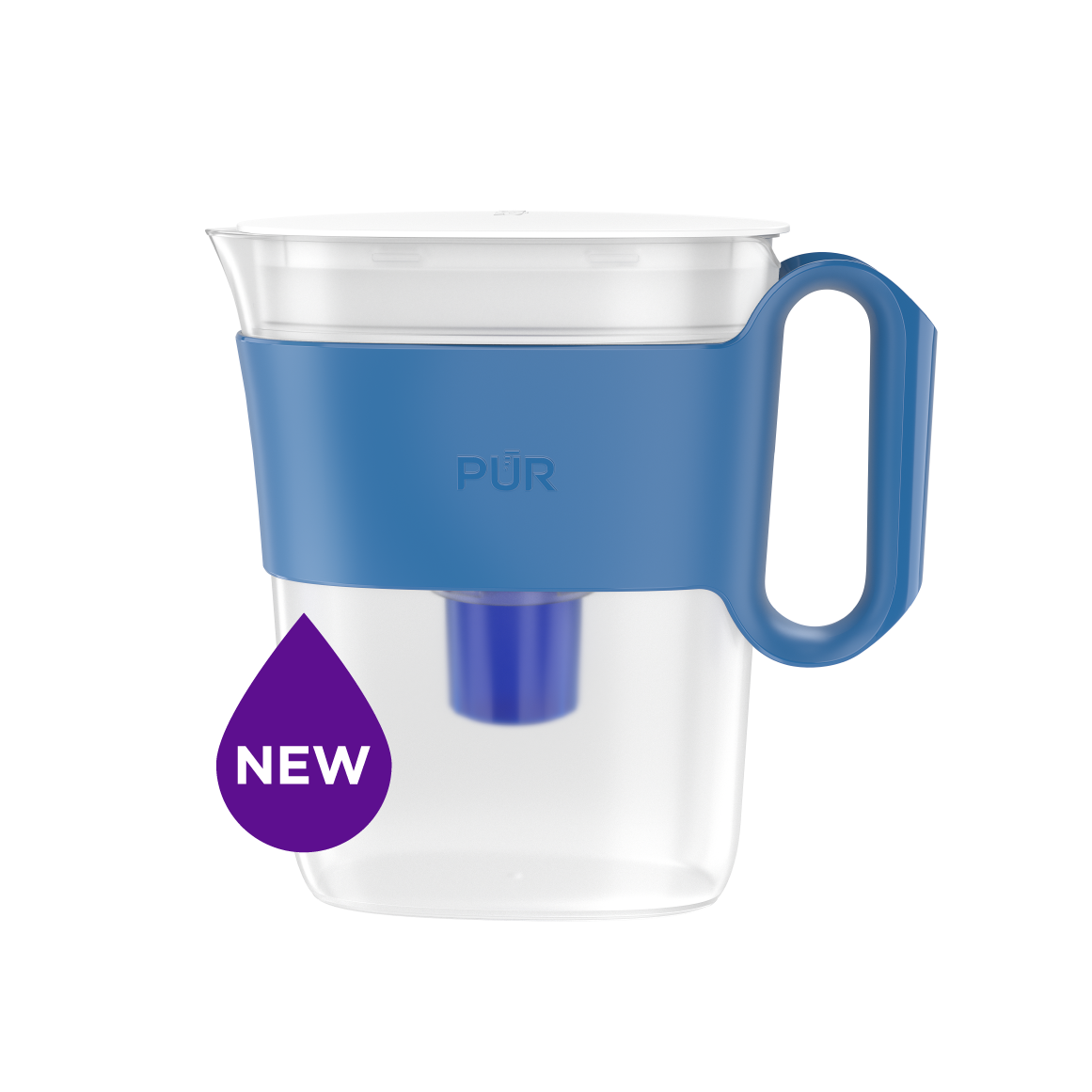
PUR PLUS PITCHER FILTERS
PPF951K

View Filter

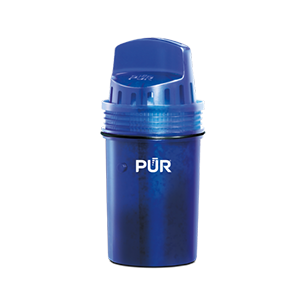
PUR BASIC PITCHER FILTERS
PPF900Z

View Filter


Vs. Brita*

Lead
Microplastics
Mercury
Chlorine Taste & Odor
DEET
TTHM

PUR’s Filtration Systems Are Certified By NSF And WQA For Their Contamination Reduction. WQA certifications as of 5/27/21 for Faucet filter models RF-3375 and RF-9999.

¹ Certified to reduce 10X more chemical and physical substances than Brita’s® leading pitcher filter.
² Certified to reduce 3X more chemical and physical substances than Brita’s® leading pitcher filter.
³ Certified to reduce 2X more chemical and physical substances than Brita’s® leading pitcher filter.
*Versus best-selling Brita® pitcher filter OB03. Brita® is a trademark of Brita LP.
**Like other leading brands, PUR does not filter microbes. As of 3/1/23 Brita® and ZeroWater® were not certified to filter microbes. Brita® is a trademark of Brita LP. ZeroWater® is a trademark of Zero Technologies, LLC..
 

PUR & PUR PLUS FAUCET FILTERS


PUR & PUR PLUS FAUCET FILTERS
RF3375/RF9999

View Filters


Vs. Brita*

Lead
Microplastics
Mercury
Chlorine Taste & Odor
DEET
TTHM

PUR’s Filtration Systems Are Certified By NSF And WQA For Their Contamination Reduction. WQA certifications as of 5/27/21 for Faucet filter models RF-3375 and RF-9999.

¹ Certified to reduce 10X more chemical and physical substances than Brita’s® leading pitcher filter.
² Certified to reduce 3X more chemical and physical substances than Brita’s® leading pitcher filter.
³ Certified to reduce 2X more chemical and physical substances than Brita’s® leading pitcher filter.
*Versus best-selling Brita® pitcher filter OB03. Brita® is a trademark of Brita LP.
**Like other leading brands, PUR does not filter microbes. As of 3/1/23 Brita® and ZeroWater® were not certified to filter microbes. Brita® is a trademark of Brita LP. ZeroWater® is a trademark of Zero Technologies, LLC..


PUR PLUS PITCHER FILTERS


PUR PLUS PITCHER FILTERS
PPF951K

View Filter


Vs. Brita*

Lead
Microplastics
Mercury
Chlorine Taste & Odor
DEET
TTHM

PUR’s Filtration Systems Are Certified By NSF And WQA For Their Contamination Reduction. WQA certifications as of 5/27/21 for Faucet filter models RF-3375 and RF-9999.

¹ Certified to reduce 10X more chemical and physical substances than Brita’s® leading pitcher filter.
² Certified to reduce 3X more chemical and physical substances than Brita’s® leading pitcher filter.
³ Certified to reduce 2X more chemical and physical substances than Brita’s® leading pitcher filter.
*Versus best-selling Brita® pitcher filter OB03. Brita® is a trademark of Brita LP.
**Like other leading brands, PUR does not filter microbes. As of 3/1/23 Brita® and ZeroWater® were not certified to filter microbes. Brita® is a trademark of Brita LP. ZeroWater® is a trademark of Zero Technologies, LLC..


PUR BASIC PITCHER FILTERS


PUR BASIC PITCHER FILTERS
PPF900Z

View Filter


Vs. Brita*

Lead
Microplastics
Mercury
Chlorine Taste & Odor
DEET
TTHM

PUR’s Filtration Systems Are Certified By NSF And WQA For Their Contamination Reduction. WQA certifications as of 5/27/21 for Faucet filter models RF-3375 and RF-9999.

¹ Certified to reduce 10X more chemical and physical substances than Brita’s® leading pitcher filter.
² Certified to reduce 3X more chemical and physical substances than Brita’s® leading pitcher filter.
³ Certified to reduce 2X more chemical and physical substances than Brita’s® leading pitcher filter.
*Versus best-selling Brita® pitcher filter OB03. Brita® is a trademark of Brita LP.
**Like other leading brands, PUR does not filter microbes. As of 3/1/23 Brita® and ZeroWater® were not certified to filter microbes. Brita® is a trademark of Brita LP. ZeroWater® is a trademark of Zero Technologies, LLC..


China Top 10 Smart Door Lock Manufacturers?

China’s smart home industry has produced many capable Smart Door Lock manufacturers. Their products appear in apartments, hotels, offices, and modern villas worldwide. This guide explores ten leading companies and the qualities that distinguish them. The selection considers manufacturing experience, product reliability, certification, innovation, and export capability. It also examines fingerprint recognition, PIN access, mobile applications, mechanical keys, and emergency power options.

Real performance matters more than polished brochures. A dependable lock should respond quickly, fit accurately, and remain stable after thousands of daily uses. Battery warnings must arrive before the door becomes inconvenient. Installation should not require excessive adjustment or specialized tools. These details often reveal a manufacturer’s practical experience. However, “top” does not mean perfect. Rankings can change by market, product series, pricing, and after-sales support. That deserves honest attention.

This overview compares factory strength, research investment, quality controls, and customization services. It also considers how each manufacturer supports distributors, builders, and residential users. Some companies may excel in commercial projects but offer fewer consumer features. Others may provide attractive designs while needing stronger software support. Buyers should verify current certifications, warranty terms, application security, and local service coverage before ordering. Small gaps matter. A beautiful lock is not enough. By combining documented evidence with real-world considerations, this guide offers a balanced starting point for evaluating China’s leading Smart Door Lock manufacturers.

China Top 10 Smart Door Lock Manufacturers?

What Defines a Leading Smart Door Lock Manufacturer in China

What Defines a Leading Smart Door Lock Manufacturer in China

China’s strongest smart door lock manufacturers combine engineering depth, stable production, and accountable after-sales service. MarketsandMarkets estimated the global smart lock market at about USD 2.2 billion in 2023, with continued double-digit growth expected through 2028. This growth raises the standard for suppliers. A reliable manufacturer should show documented testing for fingerprint accuracy, emergency power access, motor durability, and resistance to dust and moisture. Factory audits, traceable components, and repeatable quality checks matter more than attractive product renders.

Security is not only about opening the door. It also covers firmware, mobile applications, cloud access, and personal data handling. Manufacturers serving international buyers should explain encryption practices, vulnerability response procedures, and update support. Alignment with frameworks such as ISO/IEC 27001 and ETSI EN 303 645 can provide useful evidence, although certificates alone do not guarantee secure products. They must be supported by practical testing and transparent records.

Production flexibility also separates experienced suppliers from temporary traders. MarketsandMarkets projected smart lock demand to expand at a 14.8% compound annual growth rate between 2023 and 2028. Leading factories should manage pilot orders, customized mortise sizes, multilingual interfaces, and consistent mass production. That sounds obvious. It is not always true. A polished showroom may hide weak firmware maintenance or delayed spare parts. Buyers should inspect sample history, failure data, warranty handling, and response times before ranking a manufacturer among China’s top ten.

China’s Top 10 Smart Door Lock Manufacturers at a Glance

China Top 10 Smart Door Lock Manufacturers?

China’s Top 10 Smart Door Lock Manufacturers at a Glance

China’s smart door lock sector is expanding with connected-home adoption. MarketsandMarkets estimates the global smart lock market could grow from about USD 2.5 billion in 2024 to USD 4.9 billion by 2029. That growth reflects demand for keyless entry, remote monitoring, and integrated home security.

The leading ten manufacturers should be compared through practical evidence, not attractive product images. Important indicators include fingerprint recognition accuracy, encrypted communication, battery endurance, emergency power access, and certification coverage. A reliable lock should still open safely after a weak network signal or a flat battery. Small details matter.

Field experience also exposes differences between laboratory claims and daily use. A lock may support several unlocking methods, yet installation quality can affect performance. IDC’s China smart-home research highlights continued growth in connected devices, but interoperability remains uneven across platforms. That weakness deserves attention. Buyers should request test records, warranty terms, software-update policies, and local service capacity before choosing a supplier.

The strongest manufacturers usually provide clear technical specifications and traceable quality controls. Still, no ranking is permanent. Product revisions, security testing, and after-sales performance can change the order within a year.

China’s Top 10 Smart Door Lock Manufacturers at a Glance

Profile Main Manufacturing Region Primary Product Focus Common Unlock Methods Connectivity Options Typical Compliance Documentation OEM/ODM Capability Typical Export Markets
01 Guangdong Residential fingerprint and PIN locks Fingerprint, PIN, RFID card, mechanical key Bluetooth; optional Wi-Fi gateway CE, RoHS, EMC, RED where applicable High; enclosure, firmware, packaging Europe, Southeast Asia, Middle East
02 Zhejiang Mortise locks for apartments and villas Fingerprint, password, card, key, mobile app Bluetooth; Wi-Fi and Zigbee variants CE, RoHS, FCC for relevant markets High; private-label programs available North America, Europe, Australia
03 Guangdong Hotel and serviced-apartment locks RFID card, mobile key, PIN, mechanical override RFID; Bluetooth gateway integration CE, RoHS, hotel-system integration testing Medium to high; access-control integration Hotels in Asia, Europe, Africa
04 Jiangsu Digital keypad and deadbolt locks PIN, RFID card, app, physical key Bluetooth; Wi-Fi bridge options CE, FCC, RoHS, battery-safety testing High; custom colors and user interfaces United States, Canada, Europe
05 Guangdong Facial-recognition and biometric locks Face recognition, fingerprint, PIN, key Wi-Fi; Bluetooth; mobile application CE, RoHS, EMC; privacy documentation varies Medium; firmware customization subject to project Southeast Asia, Middle East, Africa
06 Zhejiang Smart lever and handle locks Fingerprint, PIN, card, app, key Bluetooth; selected smart-home platforms CE, RoHS, FCC, IP testing when specified High; handle design and logo customization Europe, Latin America, Southeast Asia
07 Fujian Padlocks and cabinet smart locks Fingerprint, app, PIN, key override Bluetooth Low Energy CE, RoHS, FCC; battery testing High; compact product customization North America, Europe, online retail channels
08 Shanghai and surrounding region Commercial access-control locks RFID, PIN, biometric reader, mobile credential Ethernet, RS-485, Wiegand, wireless gateways CE, RoHS, EMC, system-specific testing Medium; system integration is project-based Commercial projects in Asia and the Middle East
09 Guangdong Sliding-door and aluminum-frame locks PIN, fingerprint, card, app, key Bluetooth; optional Wi-Fi gateway CE, RoHS, corrosion and durability testing Medium to high; door-profile adaptation Australia, Southeast Asia, Middle East
10 Shenzhen and Dongguan Connected smart-home door locks Fingerprint, PIN, app, voice assistant, key Wi-Fi, Bluetooth, Zigbee, Matter-ready designs CE, FCC, RoHS, cybersecurity documentation varies High; hardware and smart-home integration Europe, North America, Japan, South Korea

Key Products and Technologies Offered by Each Manufacturer

China Top 10 Smart Door Lock Manufacturers: Key Products and Technologies

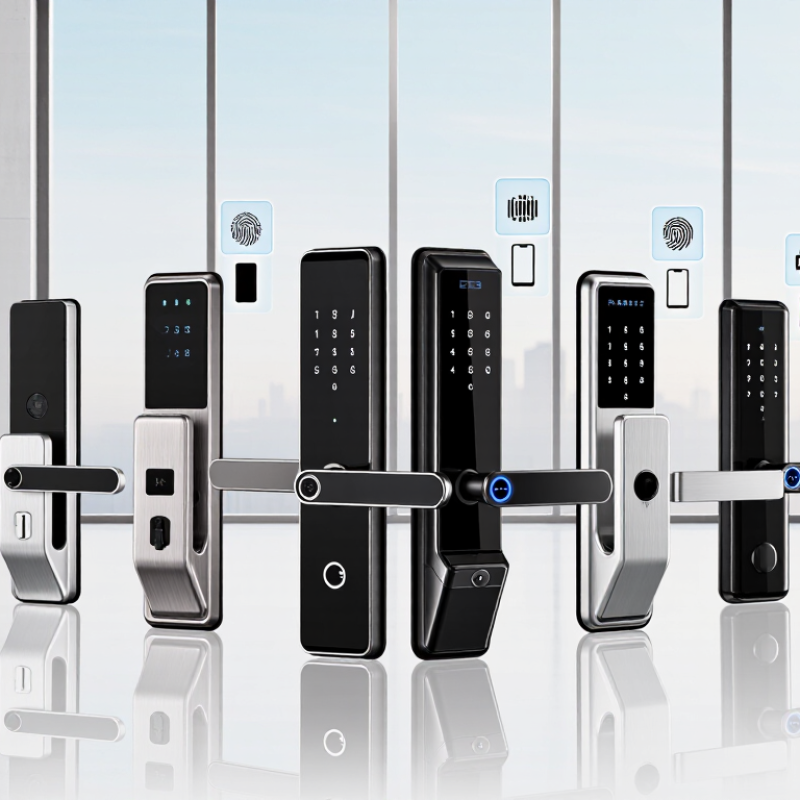
China’s leading ten smart door lock manufacturers serve homes, apartments, hotels, and offices. Their product ranges usually include fingerprint deadbolts, facial-recognition locks, keypad models, and video intercom locks. Several suppliers also offer smart cylinders for upgrading existing doors without replacing the entire frame.

Fingerprint models commonly use semiconductor sensors with live-finger detection. Facial-recognition products add infrared cameras, depth sensing, and local image processing. Some manufacturers provide palm-vein or Bluetooth unlocking, but compatibility varies. Wi-Fi, Zigbee, Bluetooth, and Matter gateways support remote control and home automation. Matter support is growing, although product integration remains uneven.

Battery design is another major difference. Leading suppliers use lithium batteries, emergency USB-C power, and low-battery voice alerts. Hotel-focused manufacturers often add NFC cards, temporary codes, audit logs, and centralized management software. Apartment solutions may include cloud dashboards, visitor passwords, and elevator-control integration. According to MarketsandMarkets, the global smart lock market is projected to grow from about USD 2.4 billion in 2023 to more than USD 4 billion by 2028. China’s manufacturing depth supports competitive pricing and rapid customization.

Security should not be judged by appearance. Semiconductor sensors can reject fake fingerprints, but accuracy may drop with wet or damaged fingers. Facial recognition also needs careful testing under poor lighting. That gap matters. According to the Connectivity Standards Alliance, Matter is designed to improve interoperability across smart-home ecosystems, yet installation quality still affects reliability. Buyers should request test reports, encryption details, firmware policies, and after-sales response times before selecting a supplier.

How to Compare Quality, Security, Certifications, and Pricing

China Top 10 Smart Door Lock Manufacturers?

Comparing manufacturers requires more than checking factory photos. MarketsandMarkets’ 2024 report forecasts the smart lock market to grow from about USD 2.4 billion in 2023 to USD 4.4 billion by 2028. That growth attracts capable suppliers and careless claims. Request production records, failure-rate data, and firmware update policies. Examine lock bodies, motors, springs, and emergency power contacts. A heavy metal shell does not guarantee dependable security.

Security testing should match the installation. Ask for evidence against relevant standards, such as UL 294, ANSI/BHMA A156.40, ETSI EN 303 645, or applicable Chinese requirements. Certifications must identify the exact model, factory, and test scope. ISO 9001 shows process management, not cybersecurity. Review encryption, password rules, biometric accuracy, audit logs, and remote-access controls. NIST’s IoT guidance also stresses secure updates and unique credentials. No checklist catches every firmware flaw.

Tips: Request three production samples, not one. Test them after repeated low-battery warnings, wet conditions, and failed fingerprints. Compare the total landed cost, including gateways, cloud fees, spare batteries, installation, warranty returns, and minimum order quantities. A lower quotation can become expensive after replacement parts arrive. I would also inspect the mobile application personally. Translation errors and delayed notifications are small defects, until a user depends on them at night. Pricing should follow measured performance, not impressive packaging.

Choosing the Right Chinese Smart Door Lock Supplier for Your Needs

China Top 10 Smart Door Lock Manufacturers?

Choosing the right Chinese smart door lock supplier requires more than comparing factory prices. Grand View Research valued the global smart lock market at about USD 2.49 billion in 2022. It forecasts a 19.6% annual growth rate through 2030. MarketsandMarkets offers a different estimate, projecting growth from USD 2.1 billion in 2023 to USD 4.4 billion by 2028. The gap matters. Market reports use different definitions and samples.

Request a live factory audit, not only polished product photos. Check machining quality, lock-body tolerances, battery access, and emergency power points. Ask for test records covering corrosion, repeated unlocking, water resistance, and temperature changes. A reliable supplier should explain firmware updates, data protection, user permissions, and vulnerability response in clear language. Certifications must match your target market and product configuration.

Order samples before signing a large contract. Test fingerprint recognition with wet, dusty, and aging fingers. Measure battery performance during frequent daily use. Also inspect the mobile application, local-language support, packaging, spare parts, and warranty process. Factory experience can reduce risk, but it does not guarantee stable quality. I would treat unusually low quotations carefully; savings may hide weaker components or limited after-sales support. Check production capacity during peak seasons. Small details often expose the real supplier.