


Contaminant Comparison Chart

For a complete list of contaminants that PUR filters reduce, please view our Performance Data Sheets here.


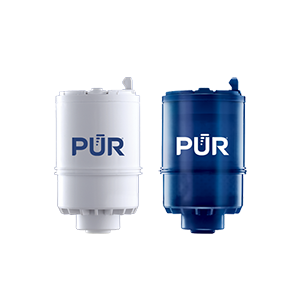
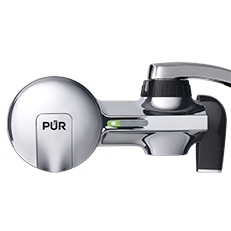
PUR & PUR PLUS FAUCET FILTERS
RF3375/RF9999

View Filters

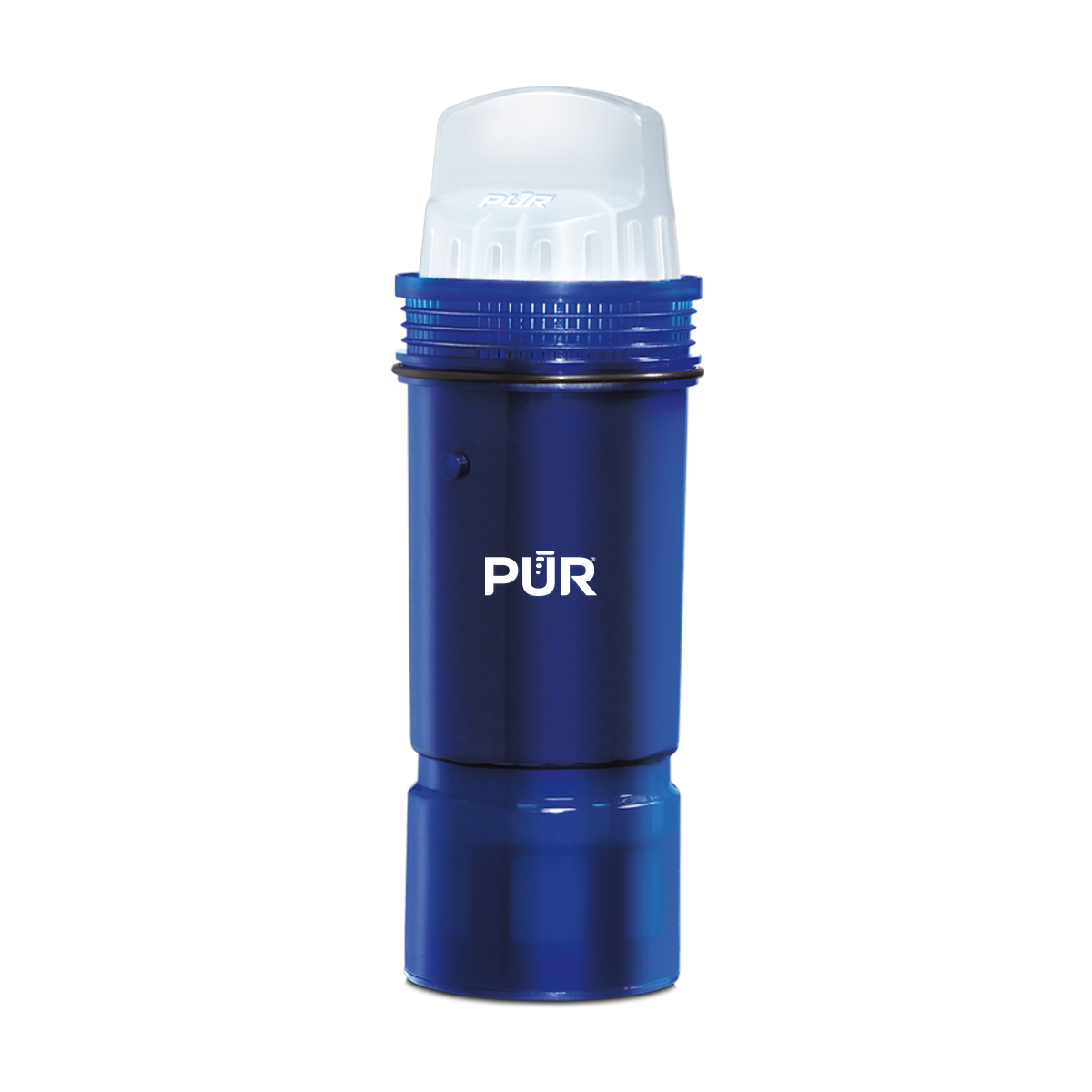
PUR PLUS PITCHER FILTERS
PPF951K

View Filter

PUR BASIC PITCHER FILTERS
PPF900Z

View Filter


Vs. Brita*

Lead ✓ ✓
Microplastics ✓ ✓
Mercury ✓ ✓ ✓
Chlorine Taste & Odor ✓ ✓ ✓
DEET ✓
TTHM ✓

PUR’s Filtration Systems Are Certified By NSF And WQA For Their Contamination Reduction. WQA certifications as of 5/27/21 for Faucet filter models RF-3375 and RF-9999.

¹ Certified to reduce 10X more chemical and physical substances than Brita’s® leading pitcher filter.
² Certified to reduce 3X more chemical and physical substances than Brita’s® leading pitcher filter.
³ Certified to reduce 2X more chemical and physical substances than Brita’s® leading pitcher filter.
*Versus best-selling Brita® pitcher filter OB03. Brita® is a trademark of Brita LP.
**Like other leading brands, PUR does not filter microbes. As of 3/1/23 Brita® and ZeroWater® were not certified to filter microbes. Brita® is a trademark of Brita LP. ZeroWater® is a trademark of Zero Technologies, LLC..

 

PUR & PUR PLUS FAUCET FILTERS


PUR & PUR PLUS FAUCET FILTERS
RF3375/RF9999

View Filters


Vs. Brita*

Lead ✓
Microplastics ✓
Mercury ✓
Chlorine Taste & Odor ✓
DEET ✓
TTHM ✓

PUR’s Filtration Systems Are Certified By NSF And WQA For Their Contamination Reduction. WQA certifications as of 5/27/21 for Faucet filter models RF-3375 and RF-9999.

¹ Certified to reduce 10X more chemical and physical substances than Brita’s® leading pitcher filter.
² Certified to reduce 3X more chemical and physical substances than Brita’s® leading pitcher filter.
³ Certified to reduce 2X more chemical and physical substances than Brita’s® leading pitcher filter.
*Versus best-selling Brita® pitcher filter OB03. Brita® is a trademark of Brita LP.
**Like other leading brands, PUR does not filter microbes. As of 3/1/23 Brita® and ZeroWater® were not certified to filter microbes. Brita® is a trademark of Brita LP. ZeroWater® is a trademark of Zero Technologies, LLC..


PUR PLUS PITCHER FILTERS


PUR PLUS PITCHER FILTERS
PPF951K

View Filter


Vs. Brita*

Lead ✓
Microplastics ✓
Mercury ✓
Chlorine Taste & Odor ✓
DEET
TTHM

PUR’s Filtration Systems Are Certified By NSF And WQA For Their Contamination Reduction. WQA certifications as of 5/27/21 for Faucet filter models RF-3375 and RF-9999.

¹ Certified to reduce 10X more chemical and physical substances than Brita’s® leading pitcher filter.
² Certified to reduce 3X more chemical and physical substances than Brita’s® leading pitcher filter.
³ Certified to reduce 2X more chemical and physical substances than Brita’s® leading pitcher filter.
*Versus best-selling Brita® pitcher filter OB03. Brita® is a trademark of Brita LP.
**Like other leading brands, PUR does not filter microbes. As of 3/1/23 Brita® and ZeroWater® were not certified to filter microbes. Brita® is a trademark of Brita LP. ZeroWater® is a trademark of Zero Technologies, LLC..


PUR BASIC PITCHER FILTERS


PUR BASIC PITCHER FILTERS
PPF900Z

View Filter


Vs. Brita*

Lead
Microplastics
Mercury ✓
Chlorine Taste & Odor ✓
DEET
TTHM

PUR’s Filtration Systems Are Certified By NSF And WQA For Their Contamination Reduction. WQA certifications as of 5/27/21 for Faucet filter models RF-3375 and RF-9999.

¹ Certified to reduce 10X more chemical and physical substances than Brita’s® leading pitcher filter.
² Certified to reduce 3X more chemical and physical substances than Brita’s® leading pitcher filter.
³ Certified to reduce 2X more chemical and physical substances than Brita’s® leading pitcher filter.
*Versus best-selling Brita® pitcher filter OB03. Brita® is a trademark of Brita LP.
**Like other leading brands, PUR does not filter microbes. As of 3/1/23 Brita® and ZeroWater® were not certified to filter microbes. Brita® is a trademark of Brita LP. ZeroWater® is a trademark of Zero Technologies, LLC..


Top SMT Assembly Manufacturers for Global Buyers?

For global buyers, selecting an Smt Assembly partner is more than comparing prices or factory locations. A dependable supplier must translate board files, component lists, and delivery targets into repeatable production. Small process gaps can matter: a misplaced 0402 component, an unclear revision change, or a missed inspection can delay an entire shipment.

Manufacturing pioneer Taiichi Ohno’s well-known principle applies here: “Without standards, there can be no improvement.” Buyers can use that idea when assessing suppliers. Ask how each factory controls solder-paste printing, placement accuracy, reflow profiles, and inspection records. Look for practical evidence, such as SPI and AOI results, traceability by lot, and clear procedures for engineering changes. Then discuss capacity, component sourcing, prototype support, and communication across time zones. Details matter.

This guide examines manufacturers through the needs of international customers, including quality systems, technical capability, responsiveness, and supply-chain resilience. A polished website is not proof of consistent production. Request recent audit information, sample reports, and references for projects with similar board complexity. No shortlist is perfect; requirements differ, and public information can be incomplete. Some buyers may also overvalue factory size when engineering support is the real constraint. That deserves a second look. Use the comparisons as a starting point, then verify the details directly before committing a critical product to production.

Top SMT Assembly Manufacturers for Global Buyers?

Define SMT Assembly Scope: PCB Complexity, Order Volume, and 01005 Parts (0.4 × 0.2 mm)

Before comparing SMT assembly manufacturers, define the board and production task. Record layer count, board dimensions, fine-pitch package sizes, mixed through-hole content, and panelization. These details affect tooling, inspection, and achievable throughput. Specify both total demand and order pattern: 500 boards in one batch differs from five 100-board releases. WSTS’s Spring 2024 forecast projected semiconductor sales of $611.2 billion that year, up 16% from 2023. That market growth signals a large component ecosystem, but it does not guarantee local availability or stable lead times. Ask suppliers how they manage shortages and approved substitutions.

Treat 01005 components as a process capability question, not a checkbox. Each part measures 0.4 × 0.2 mm. Tiny margins. Ask whether the line uses suitable stencil apertures, solder-paste inspection, calibrated placement equipment, and verified reflow profiles. Request yield data from comparable builds, not just machine-resolution figures. A placement head can be precise while paste release remains inconsistent. The distinction matters.

Share the smallest pitch, component mix, and expected annual volume when requesting quotes. Include prototype quantities and ramp schedules. IPC’s standards and process guidance can help frame acceptance criteria, but a standard alone cannot prove a supplier’s repeatable performance. One awkward detail: buyers sometimes provide a nominal forecast that changes every month. Ask for capacity assumptions in writing, then compare them with actual delivery and inspection records.

Define SMT Assembly Scope: PCB Complexity, Order Volume & 01005 Parts

Nominal body dimensions of common chip components. The metric package code is shown; imperial codes are included for reference.

How to use this in an RFQ: The 01005 metric package (0402 imperial) has a nominal body size of 0.4 × 0.2 mm. Specify the PCB layer count and dimensions, fine-pitch components, BOM and placement quantities, order volume, and the number and location of 01005 parts. These package dimensions describe component bodies, not PCB land patterns; confirm footprints and process requirements against the component manufacturer’s datasheets. Complexity and volume should be defined per project rather than inferred from package size alone.

Compare Global SMT Manufacturers by Production Scale, Certifications, and Market Reach

Global buyers should compare usable SMT capacity, not headline machine counts. A large placement fleet can still bottleneck at solder-paste inspection, reflow, or final test. Ask for monthly output by board complexity, changeover time, first-pass yield, and peak utilization. Small details matter. WSTS reported global semiconductor sales of $627.6 billion in 2024, up 19.1% year over year; the Semiconductor Industry Association published the same annual market result. This signals strong demand, but it does not prove any supplier can meet your schedule. Request recent, site-specific production evidence.

Certifications help when their scope matches your product and factory. Check current certificates, audit dates, and whether the named site performs assembly or only administration. ISO 9001 supports quality-system review; ISO 13485 or IATF 16949 may be relevant for specific sectors. Match the requirement to the application. For market reach, compare regional production sites, engineering support, shipping routes, and contingency plans. A supplier with several locations may still rely on one plant for a critical process. Ask to see a sample traceability record and a realistic recovery plan. A polished capacity figure can mislead; buyers should verify it against their own board mix and forecast.

Evaluate Process Quality Against IPC-A-610 Class 2 and Class 3 Criteria

When comparing SMT assembly manufacturers, ask how they verify each board against IPC-A-610 Class 2 or Class 3 requirements. Class 2 suits products expected to operate reliably over an extended life; Class 3 applies where uninterrupted performance matters. The class should be agreed before production, not selected after inspection. Ask for sample inspection records, defect classifications, and corrective-action examples. A clear record beats a polished capability sheet.

IPC’s 2024 Electronics Industry Survey tracks workforce and supply-chain pressures across the sector. These pressures can affect operator consistency and component availability, so review how a supplier controls training, substitutions, and lot traceability. For a practical check, inspect solder joints under magnification and compare the evidence with the agreed class. Look for repeatable criteria, not just a low reported defect rate. One awkward gap often matters: a supplier may use automated optical inspection but lack clear procedures for resolving borderline findings.

Tips: Request anonymized inspection records from a recent build. Ask how inspectors handle disputed defects. Confirm the class, revision, and acceptance rules in writing. Don’t assume Class 3 means zero defects.

Top SMT Assembly Manufacturers for Global Buyers? - Evaluate Process Quality Against IPC-A-610 Class 2 and Class 3 Criteria

Anonymous supplier-evaluation matrix for comparing documented SMT assembly capability. Use the applicable IPC-A-610 revision and product-specific acceptance criteria in the purchase agreement.

Evaluation Dimension IPC-A-610 Class 2 Lens IPC-A-610 Class 3 Lens Evidence to Request from the Supplier Buyer Evaluation
Solder-joint acceptability Assess solder connections against the applicable Class 2 criteria for the joint type, component, and assembly configuration. Apply the applicable Class 3 criteria, which are intended for products requiring higher performance and reliability; do not assume every joint uses one universal threshold. Inspection records with board and lot identifiers; representative inspection images; documented disposition of nonconforming joints. Compare inspected samples with the agreed class and applicable acceptance criteria.
Component placement and polarity Check installation, orientation, seating, and identification against applicable acceptance criteria and assembly documentation. Apply the stricter applicable acceptance criteria for the product’s Class 3 designation and verify that orientation and installation meet the released design. Approved assembly drawings; first-article records; automated optical inspection (AOI) results; documented polarity and placement checks. Confirm that inspection coverage includes the components and defects relevant to the design.
Printed board and laminate condition Evaluate observable board and laminate conditions against the applicable Class 2 criteria and agreed incoming-material requirements. Evaluate against the applicable Class 3 criteria, with particular attention to conditions that could affect continued service or reliability. Incoming inspection records; material lot traceability; photographs and nonconformance reports for rejected or suspect boards. Verify the supplier separates material acceptance from workmanship acceptance.
Cleanliness and residues Determine acceptability using the applicable standard criteria, product requirements, and any specified cleanliness requirements. Apply applicable Class 3 criteria and any additional product-specific cleanliness or residue controls agreed by the buyer. Cleaning-process description, where applicable; inspection records; cleanliness test method and results when contractually required. Do not treat IPC-A-610 alone as a universal ionic-contamination limit; specify test methods and limits separately when needed.
Inspection and defect control Confirm that inspection methods can identify relevant workmanship defects and that findings are recorded and dispositioned. Confirm inspection and defect controls are appropriate to the higher reliability expectation and the product’s risk and design. AOI and X-ray inspection plans where applicable; inspection criteria; defect logs; rework and concession records. Review method coverage and limitations; equipment presence alone does not establish acceptance.
Rework and repair Verify reworked assemblies are inspected against the applicable acceptance criteria and buyer-approved rework instructions. Verify rework is controlled, documented, and assessed against the applicable Class 3 criteria and approved product requirements. Rework procedures; operator authorization records; before-and-after inspection results; repair traceability. Check that rework does not bypass inspection or erase original lot and serial traceability.
Process traceability Review whether material, assembly, and inspection records support the traceability level specified in the contract. Review traceability and record retention against the product’s reliability, regulatory, and contractual requirements. Board or lot identifiers; component lot records; process and inspection timestamps; record-retention policy. IPC-A-610 is an acceptance standard; define traceability scope and retention periods separately.
Process control and change management Assess whether the supplier controls process changes that could affect workmanship and communicates changes as agreed. Assess whether controls are suitable for the higher reliability expectations and whether significant changes receive required approval. Process-control plan; equipment maintenance and calibration records; change notifications; corrective-action records. Request evidence of sustained control, not just a one-time sample inspection.
Documentation and acceptance basis Confirm the purchase documents identify the applicable standard revision, product class, and any agreed deviations. Confirm Class 3 is explicitly specified where required, alongside the applicable revision, product-specific requirements, and deviation approvals. Contract quality clauses; approved drawings; inspection plans; deviation and concession approvals. Resolve conflicts between drawings, contract requirements, and standard criteria before production.

Important: This is a supplier comparison framework, not a certification or a claim about any specific manufacturer. IPC-A-610 provides visual acceptance criteria for electronic assemblies; it does not by itself certify an SMT process or prescribe every process-control, cleanliness, traceability, or test requirement. Final acceptance depends on the applicable standard revision, assembly details, and contractually agreed requirements.

Check Advanced-Line Capability for Fine-Pitch, 0201, and 01005 Components

For global buyers, “advanced-line” should mean proven control at the smallest package sizes, not just a high-speed placement machine. Common 0201 and 01005 chip components measure about 0.6 × 0.3 mm and 0.4 × 0.2 mm, respectively, according to IEC 60115-8 dimensional conventions. At these scales, a small error in solder-paste volume or board registration can create opens, bridges, or tombstoning. Ask manufacturers for documented placement accuracy, stencil inspection results, and process capability data on comparable boards. A tour is useful. A verified production record is better.

Fine-pitch capability needs equal scrutiny. Request examples showing actual package pitch, layer stack-up, and inspection method; “fine pitch” alone is too vague. IPC-7351 land-pattern guidance can help buyers compare footprint design and assembly assumptions, while automated optical inspection and X-ray records reveal different defect types. Look for stable results across multiple production lots, not one impressive sample. Also ask how the line handles feeder changes, humidity-sensitive components, and rework limits. These details matter. A factory may quote 01005 capability, yet still lack repeatable yield data for your board design. That gap deserves a closer look.

Match Suppliers to Industry Needs: IATF 16949 for Automotive, ISO 13485 for Medical

Global buyers should match SMT suppliers to product risk, not simply compare quotations. OICA reported 93.5 million motor vehicles produced worldwide in 2023, reflecting the scale of automotive supply chains. For automotive electronics, IATF 16949 certification is a useful screening criterion. Check that its scope covers the actual factory and SMT processes, not just a corporate office. Paperwork matters.

Then verify daily controls: lot traceability, solder-paste and reflow-profile records, component-change approval, defect containment, and corrective-action closure. IATF 16949 supports consistent quality management, but certification cannot prove every production line is stable. Request recent audit findings and yield trends. Ask how the supplier controls component substitutions during shortages.

Medical electronics call for different evidence. ISO 13485 addresses medical-device quality systems, including documented risk controls, process validation, and traceability. The ISO Survey 2022 recorded more than 36,000 ISO 13485 certificates worldwide. Certification alone is not enough. Ask for a sample production record: can a board’s serial number be linked to inspection results and approved materials? Review design-transfer and change-control examples, too. Weak engineering handoffs can still slip through.