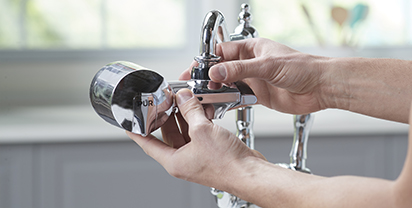
Contaminant Comparison Chart

For a complete list of contaminants that PUR filters reduce, please view our Performance Data Sheets here.


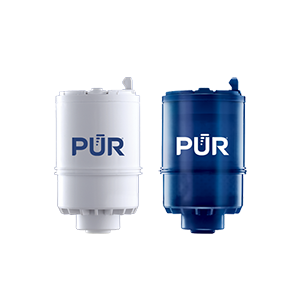
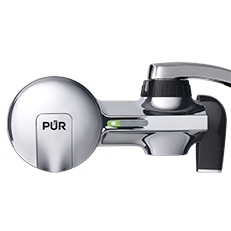
PUR & PUR PLUS FAUCET FILTERS
RF3375/RF9999

View Filters

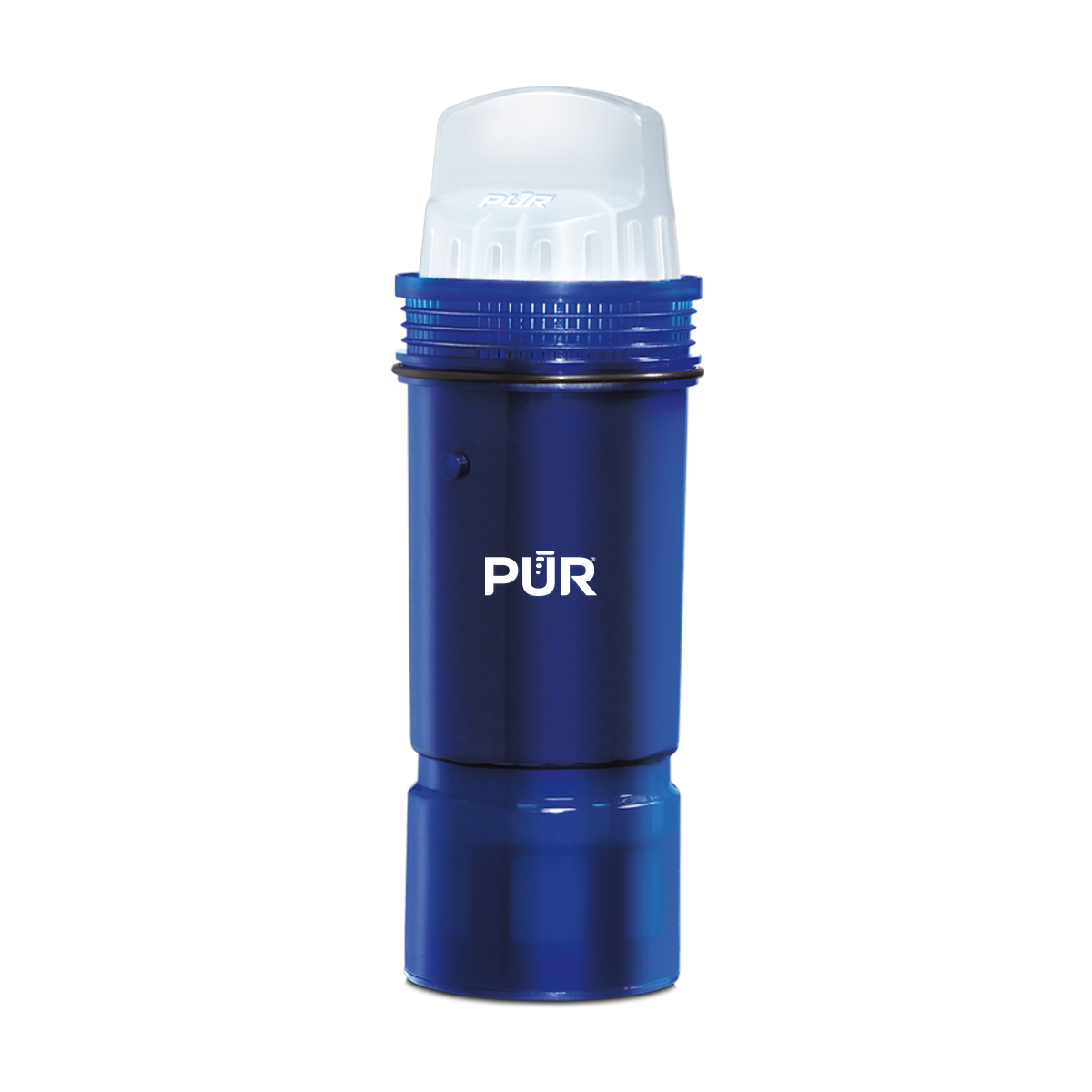
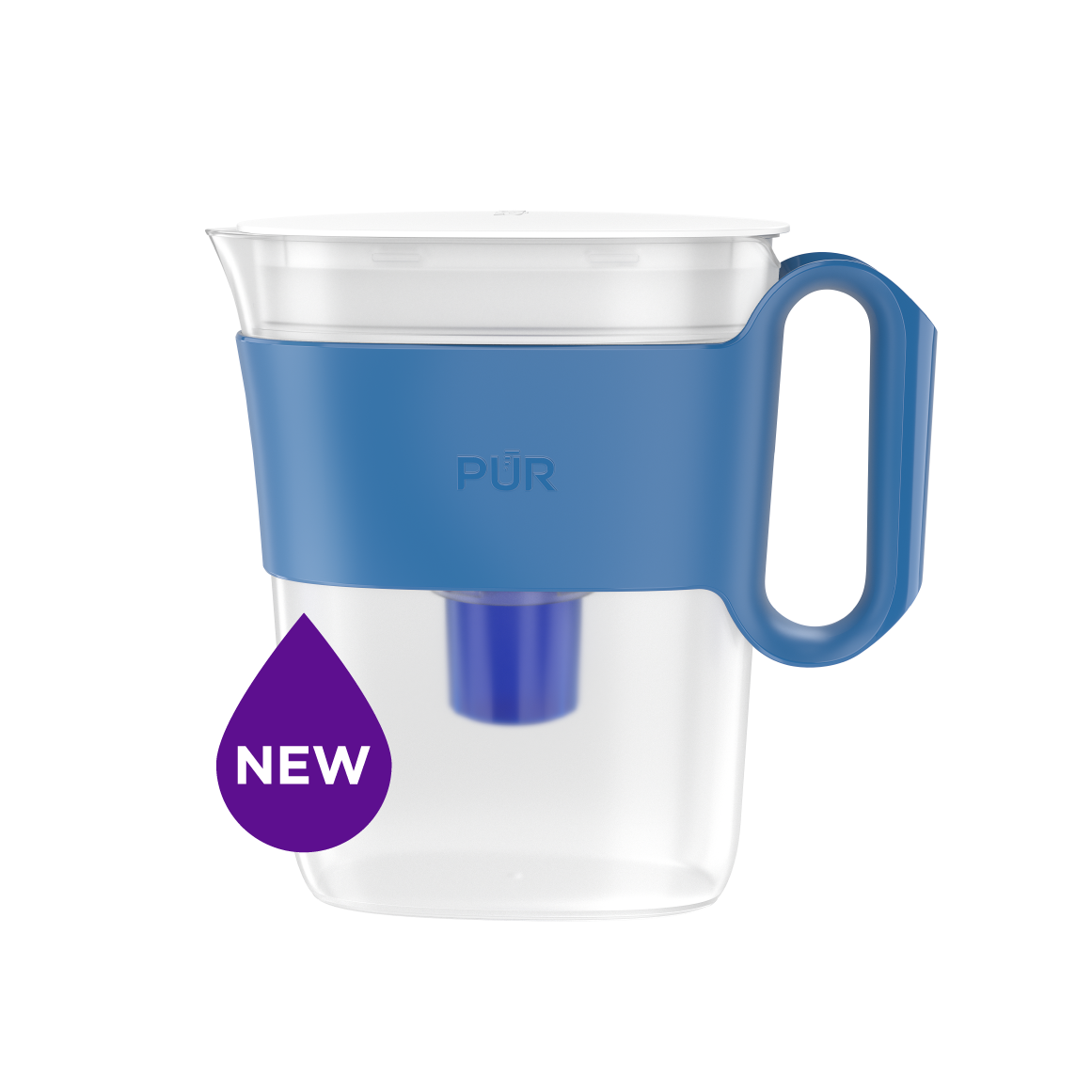
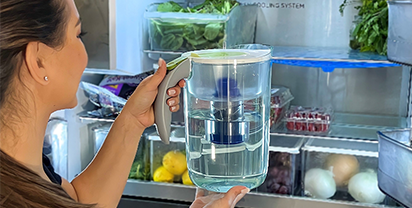
PUR PLUS PITCHER FILTERS
PPF951K

View Filter

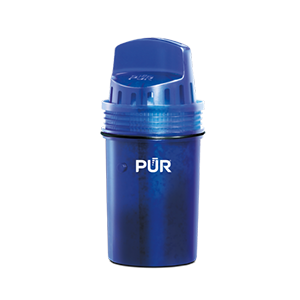
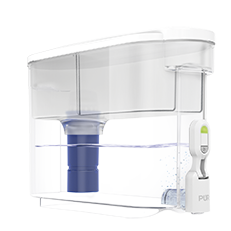
PUR BASIC PITCHER FILTERS
PPF900Z

View Filter


Vs. Brita*

Lead ✓ ✓
Microplastics ✓ ✓
Mercury ✓ ✓ ✓
Chlorine Taste & Odor ✓ ✓ ✓
DEET ✓
TTHM ✓

PUR’s Filtration Systems Are Certified By NSF And WQA For Their Contamination Reduction. WQA certifications as of 5/27/21 for Faucet filter models RF-3375 and RF-9999.

¹ Certified to reduce 10X more chemical and physical substances than Brita’s® leading pitcher filter.
² Certified to reduce 3X more chemical and physical substances than Brita’s® leading pitcher filter.
³ Certified to reduce 2X more chemical and physical substances than Brita’s® leading pitcher filter.
*Versus best-selling Brita® pitcher filter OB03. Brita® is a trademark of Brita LP.
**Like other leading brands, PUR does not filter microbes. As of 3/1/23 Brita® and ZeroWater® were not certified to filter microbes. Brita® is a trademark of Brita LP. ZeroWater® is a trademark of Zero Technologies, LLC..
 

PUR & PUR PLUS FAUCET FILTERS


PUR & PUR PLUS FAUCET FILTERS
RF3375/RF9999

View Filters


Vs. Brita*

Lead ✓
Microplastics ✓
Mercury ✓
Chlorine Taste & Odor ✓
DEET ✓
TTHM ✓

PUR’s Filtration Systems Are Certified By NSF And WQA For Their Contamination Reduction. WQA certifications as of 5/27/21 for Faucet filter models RF-3375 and RF-9999.

¹ Certified to reduce 10X more chemical and physical substances than Brita’s® leading pitcher filter.
² Certified to reduce 3X more chemical and physical substances than Brita’s® leading pitcher filter.
³ Certified to reduce 2X more chemical and physical substances than Brita’s® leading pitcher filter.
*Versus best-selling Brita® pitcher filter OB03. Brita® is a trademark of Brita LP.
**Like other leading brands, PUR does not filter microbes. As of 3/1/23 Brita® and ZeroWater® were not certified to filter microbes. Brita® is a trademark of Brita LP. ZeroWater® is a trademark of Zero Technologies, LLC..
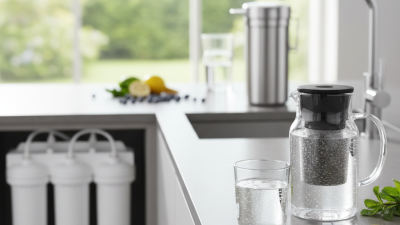
 

PUR PLUS PITCHER FILTERS


PUR PLUS PITCHER FILTERS
PPF951K

View Filter


Vs. Brita*

Lead ✓
Microplastics ✓
Mercury ✓
Chlorine Taste & Odor ✓
DEET
TTHM

PUR’s Filtration Systems Are Certified By NSF And WQA For Their Contamination Reduction. WQA certifications as of 5/27/21 for Faucet filter models RF-3375 and RF-9999.

¹ Certified to reduce 10X more chemical and physical substances than Brita’s® leading pitcher filter.
² Certified to reduce 3X more chemical and physical substances than Brita’s® leading pitcher filter.
³ Certified to reduce 2X more chemical and physical substances than Brita’s® leading pitcher filter.
*Versus best-selling Brita® pitcher filter OB03. Brita® is a trademark of Brita LP.
**Like other leading brands, PUR does not filter microbes. As of 3/1/23 Brita® and ZeroWater® were not certified to filter microbes. Brita® is a trademark of Brita LP. ZeroWater® is a trademark of Zero Technologies, LLC..
 

PUR BASIC PITCHER FILTERS


PUR BASIC PITCHER FILTERS
PPF900Z

View Filter


Vs. Brita*

Lead
Microplastics
Mercury ✓
Chlorine Taste & Odor ✓
DEET
TTHM

PUR’s Filtration Systems Are Certified By NSF And WQA For Their Contamination Reduction. WQA certifications as of 5/27/21 for Faucet filter models RF-3375 and RF-9999.

¹ Certified to reduce 10X more chemical and physical substances than Brita’s® leading pitcher filter.
² Certified to reduce 3X more chemical and physical substances than Brita’s® leading pitcher filter.
³ Certified to reduce 2X more chemical and physical substances than Brita’s® leading pitcher filter.
*Versus best-selling Brita® pitcher filter OB03. Brita® is a trademark of Brita LP.
**Like other leading brands, PUR does not filter microbes. As of 3/1/23 Brita® and ZeroWater® were not certified to filter microbes. Brita® is a trademark of Brita LP. ZeroWater® is a trademark of Zero Technologies, LLC..

 

China Top 10 Best Water Filter Brands for Global Buyers

Choosing the best water filter from China requires more than comparing prices, designs, or online popularity. Global buyers need dependable performance, clear documentation, and responsive after-sales support. This guide examines ten leading Chinese water filter brands through a practical purchasing lens. It considers filtration technology, manufacturing experience, product range, export capability, and customer feedback.

A filter may look impressive on a product page. The real test begins at installation. Can the housing resist leaks? Is replacement media easy to source? Does the manufacturer provide tested flow rates and contaminant-reduction data? These questions matter in homes, offices, hotels, and commercial kitchens. Certifications such as NSF/ANSI standards, CE marking, or other recognized approvals may support confidence, but buyers should verify each certificate independently. Labels alone are not enough.

Details often reveal more than advertising claims. A supplier that explains membrane life, pressure limits, maintenance intervals, and laboratory methods deserves closer attention. Factory audits, sample testing, and written warranty terms can also reduce purchasing risks. Still, no ranking is perfect. Water quality differs between regions, and a strong reverse osmosis system may be unnecessary for already-treated municipal water. Buyers should test their source water before selecting equipment.

This overview aims to balance technical evidence with real-world usability. It highlights strengths, possible weaknesses, and practical trade-offs across ten Chinese brands. Some information may change as models, certifications, and distribution networks develop. Careful verification remains essential. The right choice is not always the most expensive one. It is the filter that suits the water, users, budget, and service conditions.

China Top 10 Best Water Filter Brands for Global Buyers

Define Water-Filter Categories Using NSF/ANSI 42, 53, 58, and 401

China Top 10 Best Water Filter Brands for Global Buyers

Define Water-Filter Categories Using NSF/ANSI 42, 53, 58, and 401

Global buyers should classify water filters by verified performance, not attractive packaging. NSF/ANSI 42 covers aesthetic effects, including chlorine taste, odor, and visible particles. These filters can improve drinking quality. They do not automatically remove serious health contaminants.

NSF/ANSI 53 addresses health-related contaminants with specific reduction claims. A certified filter may reduce lead, cysts, or certain chemicals, but certification never means “removes everything.” Check the exact contaminant and tested capacity. This detail is often missed.

NSF/ANSI 58 applies mainly to reverse osmosis systems. It evaluates contaminant reduction, material safety, recovery, and performance under defined conditions. NSF/ANSI 401 concerns selected emerging contaminants, such as some pharmaceuticals and pesticides. The list is limited and product-specific.

Read the certification scope carefully.

In purchasing reviews, I compare the test standard, claim, flow rate, replacement interval, and local water conditions. A filter certified under one standard may perform poorly for another purpose. Installation quality also matters; a loose housing can undermine excellent testing. Buyers should verify current certification records through independent directories, request laboratory documents, and consider maintenance costs. I sometimes overvalue certification labels myself. They are useful evidence, not a complete buying decision.

Assess Global Demand: 2.2 Billion People Lacked Safely Managed Water in 2022

In 2022, 2.2 billion people lacked safely managed drinking water, according to WHO and UNICEF monitoring. This measure means water is available when needed, accessible on premises, and free from priority contamination. The figure changes how global buyers should read “top 10” water filter lists. A popular product is not automatically suitable for a village, clinic, apartment, or food workshop.

Buyers should examine independent test reports, contaminant claims, flow rate, storage capacity, and replacement intervals. They should also verify performance under local pressure, temperature, electricity, and raw-water conditions. A filter designed for clear municipal water may struggle with muddy surface water or high iron. In practical procurement, spare cartridges matter as much as the initial unit. If replacements arrive six months late, excellent filtration becomes unreliable.

Reliable suppliers explain testing methods and state what their systems cannot remove. They provide installation guidance, maintenance records, and realistic service expectations. Buyers should request a water analysis before selecting membrane, carbon, ceramic, or ultraviolet treatment. No single method fits every source. Even careful rankings can miss local problems. A household needs more than a box under the sink; it needs safe handling from source to glass.

Global Drinking Water Service Levels in 2022

In 2022, approximately 2.2 billion people lacked access to safely managed drinking water. This chart shows the global population distribution by drinking water service level, highlighting the scale of unmet demand for household water treatment and filtration solutions.

Source: WHO/UNICEF Joint Monitoring Programme for Water Supply, Sanitation and Hygiene, 2023 update. Global drinking water estimates for 2022.

Rank China’s Top 10 Brands by Certifications, Capacity, Exports, and Data

China’s water filter market includes many capable manufacturers, but global buyers need evidence beyond attractive catalogs. A useful ranking should compare certifications, production capacity, export performance, and transparent company data. Certifications should match the product and destination market. Check current test reports, factory audit records, and certificate scopes. A logo alone proves very little.

Capacity matters when projects require stable monthly supply. Review production lines, injection equipment, assembly stations, warehouse space, and quality inspection records. Export strength is also practical evidence. A supplier serving multiple regions may understand packaging, documentation, replacement parts, and shipping schedules better. However, export claims should be checked through customs records, customer references, or verifiable shipment data. Annual figures need a clear time period.

Tips: Ask for batch codes, material declarations, and recent laboratory reports. Request a live factory video or an independent audit. Compare actual output with promised capacity. Small details, such as damaged cartons or missing installation guides, often reveal operational weaknesses. A ranking is never permanent. Exchange rates, new certifications, and factory expansion can change the order quickly. I would avoid judging only by sales volume, because high output does not always mean consistent filtration performance. This is where buyer review becomes necessary. Compare at least three suppliers using the same checklist, then record every unanswered question.

Compare RO Recovery, Flow Rate, Lifespan, and TDS Performance Across 10 Brands

China Top 10 Best Water Filter Brands for Global Buyers

A practical comparison of ten Chinese water-filter suppliers should begin with RO recovery, not marketing claims. EPA WaterSense’s 2024 point-of-use RO specification targets recovery near 30%, with no more than 2.3 gallons rejected per gallon produced. Many budget systems still waste more. That gap matters in kitchens with limited drainage or high water costs.

Flow rate must be tested at a stated pressure and temperature. A label claiming 100 gallons per day may deliver much less in winter. NSF/ANSI 58 evaluates RO safety and performance, but certification does not guarantee identical household results. TDS reduction is useful, yet it is not a complete water-quality test. WHO’s Guidelines for Drinking-water Quality, 2022, warns that chemical safety depends on specific contaminants, not TDS alone. Membranes often last two to three years, while sediment and carbon cartridges commonly need replacement every six to twelve months, according to WQA technical guidance. Actual lifespan changes with feed-water hardness, chlorine, and daily volume.

Tips: Ask for recovery ratio, tested flow rate, pressure conditions, and replacement costs. Request independent test reports, not only factory charts. Check whether the stated TDS reduction applies after long-term use. A low TDS reading can look impressive while hiding poor maintenance. My comparison would score service access too, because a strong membrane becomes useless when cartridges are unavailable. One weakness remains: factory data is often cleaner than real household water.

Guide Global Buyers on Compliance, OEM Terms, Warranty, and Total Cost

China Top 10 Best Water Filter Brands for Global Buyers

Global buyers should assess compliance before comparing factory prices. The WHO/UNICEF Joint Monitoring Programme reported that 2.2 billion people lacked safely managed drinking water in 2022. This figure highlights the need for verified filtration performance, not attractive packaging. Request test reports for the target market, including contaminant reduction, material safety, flow rate, and pressure limits. NSF/ANSI 42, 53, and 58 may apply, but acceptance differs by country. Ask for current certificates, laboratory scope, and model numbers. A document without traceable testing is only paperwork.

OEM negotiations need precise terms. Define minimum order quantities, tooling ownership, filter-media specifications, packaging language, and change-control procedures. Include sampling approval before mass production. A practical warranty should state coverage periods, excluded parts, response times, and evidence requirements. Replacement cartridges deserve special attention. Their recurring cost often exceeds the initial unit price. The Global Water Intelligence market reports repeatedly show strong growth in water-treatment investment, but growth does not remove after-sales risk.

Calculate total cost across three years. Include freight, customs, installation, cartridges, rejected batches, and technical support. A low quotation can become expensive after frequent cartridge replacement. I have seen buyers overlook local water pressure and then blame the equipment. That mistake is avoidable. Still, supplier declarations are not perfect. Independent retesting remains worthwhile, especially after an OEM changes materials or production sites. A clear audit trail builds more trust than a polished catalog.