How to Choose the Best Water Filter System for Home?
Choosing a water filter system for home should begin with your water, not a polished product page. A city water report can flag common concerns, while a private well usually needs laboratory testing. The difference matters. A filter designed to reduce chlorine may improve taste, but it may not address lead, nitrate, or microorganisms. Water-quality chemist Dr. Joseph Cotruvo’s guidance can be paraphrased simply: “Test the water, then match treatment to the contaminant.” Treat that as a starting principle, not a substitute for checking current test results and product documentation.
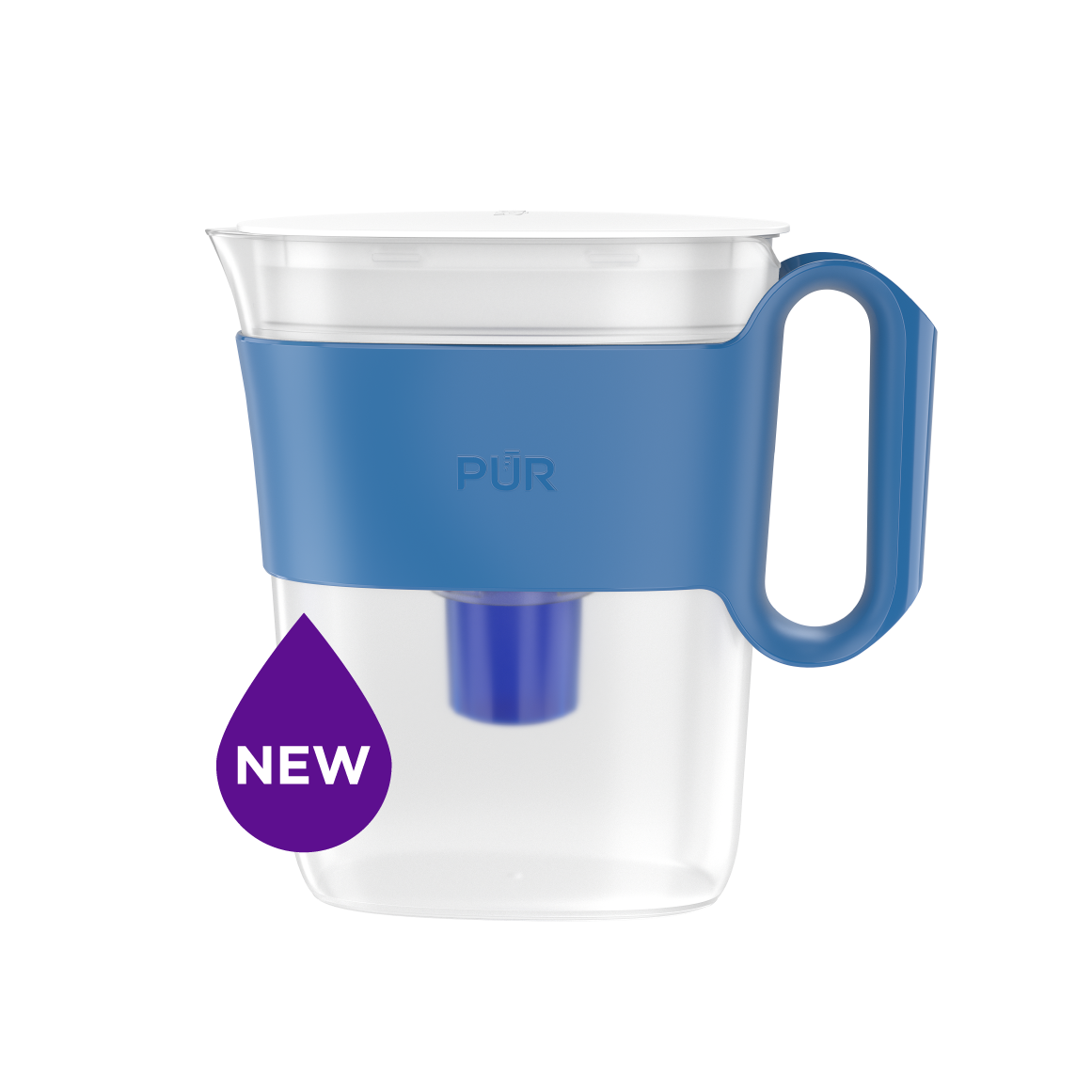
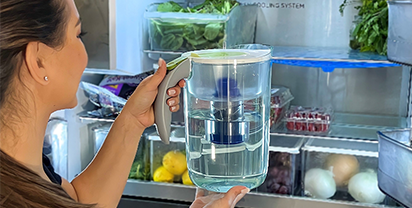
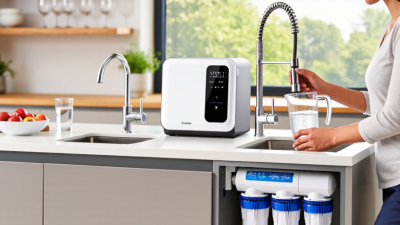
The right system also depends on daily routines. A pitcher fits a small kitchen and needs regular cartridge changes. An under-sink unit keeps a dedicated tap free for filling a glass, but installation space and replacement costs deserve a close look. Whole-house systems treat water at multiple taps; they can be useful for specific problems, yet they may be more than a household needs. Check whether independent certification, such as an applicable NSF/ANSI standard, covers the exact contaminant you want reduced. Claims can sound reassuring. Read the details.
This guide will compare filter types, certification labels, maintenance, and cost, so you can weigh practical trade-offs before buying. It will also point out where a filter may not solve the problem. That part is easy to overlook. Even careful shoppers can misread broad “purification” language, and no single system suits every home. A little uncertainty is healthy; the best choice is the one supported by your water test and your household’s needs.
Assess Your Household’s Water Quality and Filtration Needs
Before choosing a home water filter, find out what is actually in your water. Check your utility’s latest water quality report, then consider a certified laboratory test if you use a private well or notice a change in taste, color, or smell. Those signs can be useful clues, but they cannot identify specific contaminants. Numbers matter. Note results for substances such as lead, nitrates, or chlorine, and compare them with current health guidance. A report may not reflect a problem inside your own pipes.
Tips: Keep a copy of test results and note when and where each sample was collected. For well water, test regularly and after flooding or repairs. Don’t choose a filter based on a vague promise to “improve water”; match its verified reduction claims to the contaminants found in your supply.
Next, consider how much filtered water your household uses. A small countertop unit may suit one person, while a larger household may need greater flow and capacity. Check replacement schedules, filter costs, and whether installation fits your plumbing. A filter that is rarely maintained may perform poorly. It’s easy to overlook upkeep when comparing features, so be honest about what your household will actually manage.
How to Choose the Best Water Filter System for Home?
Start by testing your household’s water, then compare the results with relevant drinking-water standards.
These bars show U.S. EPA benchmarks, not filter performance. Arsenic, nitrate (measured as nitrogen), and fluoride values are maximum contaminant levels; the lead value is the EPA action level, not an MCL. Because benchmarks differ by contaminant, the bar heights should not be read as a comparison of health risk. Test your water and choose a filter whose independently certified claims cover the contaminants found.
Source: U.S. EPA drinking-water regulations. Values are in mg/L.
Compare Water Filter Types and Their Treatment Methods
Choosing a home filter starts with the water, not the filter’s appearance. A recent USGS study estimated that at least 45% of U.S. tap water may contain one or more PFAS. That national estimate does not predict what is in your kitchen tap. Check your local water report, and consider testing private-well water before choosing a system.
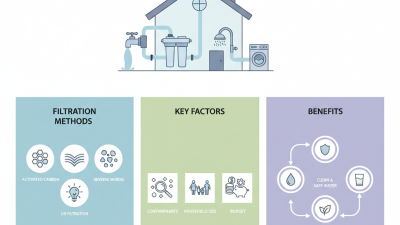
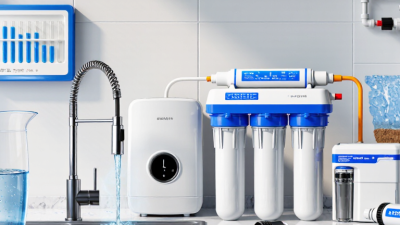
Different filters treat different problems. Sediment cartridges catch visible particles, while activated carbon can reduce chlorine taste and certain certified chemicals. Reverse osmosis pushes water through a membrane and can reduce a wider range of dissolved substances, but it also creates reject water. UV systems inactivate microbes; they do not remove metals or chemicals. Details matter. Look for independently certified claims: NSF/ANSI 42 covers aesthetic effects, 53 covers specified health-related contaminants, and 58 applies to reverse osmosis systems. These standards do not mean every model removes every contaminant. Match the certification to your test results, then check replacement intervals and water pressure. I would not choose by a long contaminant list alone; real performance can depend on the exact model and cartridge.
Match System Capacity to Household Size and Water Use
Household size is a useful starting point, but daily water use matters more. A family of four that mostly drinks tap water may need less capacity than two people who cook often and fill reusable bottles all day. Note how many gallons you drink and cook with, then compare that estimate with the filter’s rated daily capacity. Leave some room for busy days. Real life varies.
Also check flow rate, not just gallons per day. A filter may meet your daily needs but refill a glass slowly when several taps are used. For a whole-house system, consider simultaneous showers, laundry, and kitchen use. For an under-sink unit, think about how quickly you need a pot or bottle filled. A small storage tank can help, though it takes up cabinet space. Check the manufacturer’s capacity and replacement guidance, and consider testing your water before choosing a treatment type. I would not rely on household size alone; it is an imperfect shortcut. A simple week-long usage note may give you a better estimate.
Check Installation Requirements, Certifications, and Maintenance
Before buying a water filter, check what installation actually involves.
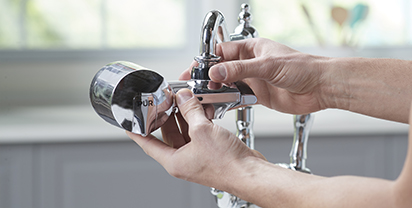
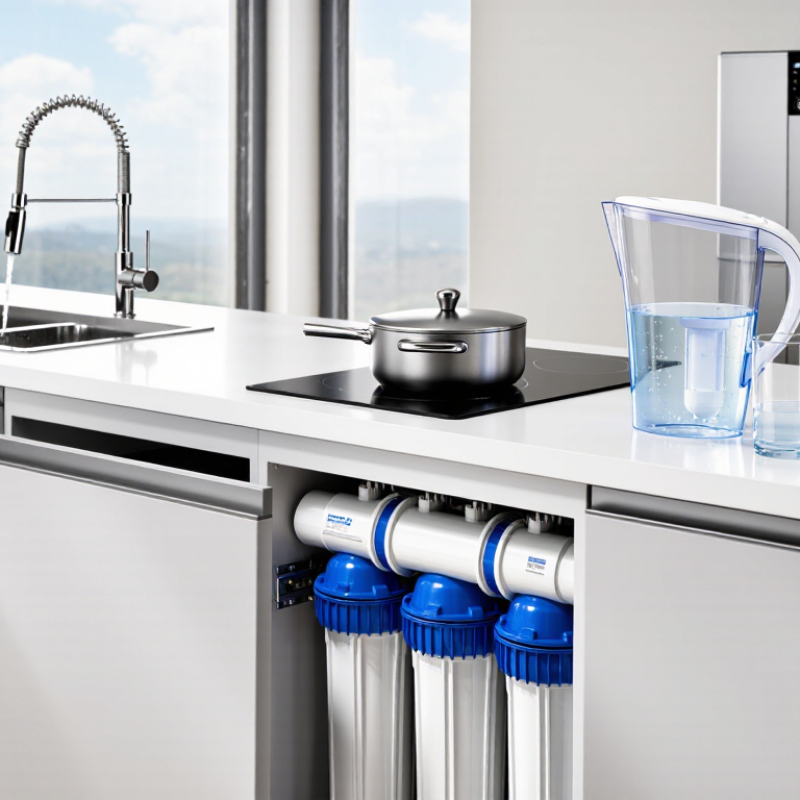
Measure the space beneath your sink, including room for a filter housing and future cartridge changes. Some systems connect to an existing faucet; others need a separate tap, a drain connection, or a nearby power outlet. Check your water pressure and pipe size against the installation guide. A tight cabinet can turn a simple job into an awkward one. It is easy to overlook that.
Look for independent certification that matches the contaminant you want to reduce. Standards such as NSF/ANSI 42, 53, or 58 cover different performance claims, so the number alone is not enough. Verify the exact system model and specific reduction claims in the certifier’s directory. A general “tested” statement may not tell you what was tested. If your water comes from a private well, consider testing it first; the right filter depends on what is present.
Maintenance affects performance over time.
Check how often each cartridge needs replacement, how much it costs, and whether you can change it without special tools. Mark the replacement date on a small label inside the cabinet. Keep the instructions nearby. Filter life can vary with water quality and daily use, so a printed schedule may need adjusting. I would revisit that schedule after noticing slower flow or a change in taste, rather than assuming the first estimate fits every household.
Compare Long-Term Costs and Choose a Suitable System
How to Choose the Best Water Filter System for Home?
Compare Long-Term Costs and Choose a Suitable System
A filter’s purchase price is only the starting point. Compare replacement cartridges, membrane changes, installation, and any water sent to drain. For a fair five-year estimate, add the system’s price to every scheduled replacement. For example, a cartridge costing $30 and replaced twice yearly adds $300 over five years. A cheap system can become expensive. Check your household’s actual water use; a large-capacity system may be unnecessary for one kitchen tap.
Match treatment to a specific concern. The U.S. EPA’s 2023 Drinking Water Infrastructure Needs Assessment estimated $625 billion in drinking-water infrastructure needs over 20 years. This is a public-system estimate, not a household filter cost, but it highlights why local water reports matter. Read your utility’s Consumer Confidence Report, then check whether a product is independently certified to the relevant NSF/ANSI standard: 42 for taste and odor, 53 for specified health effects, or 58 for reverse osmosis. Certification claims are specific, not universal.
Tips: Write down the replacement schedule and yearly cartridge cost before buying. Compare pitcher, under-sink, and reverse-osmosis systems using the same five-year period. Include installation and wastewater where relevant. I’d recheck the estimate after a year; real usage can differ from the label.
How to Choose the Best Water Filter System for Home? — Compare Long-Term Costs and Choose a Suitable System
| System Type |
Typical Upfront Cost (USD) |
Typical Annual Filter and Maintenance Cost (USD) |
Estimated 5-Year Cost (USD) |
What It Can Reduce |
Best Suited For |
Key Trade-Offs |
| Water-filter pitcher |
$20–$60 |
$40–$120 |
$220–$660 |
Often improves chlorine taste and odor. Reduction of lead or other contaminants depends on the specific filter and its certification. |
Renters, small households, and people seeking a low-cost option for drinking water. |
Limited capacity; filters need regular replacement; does not treat water throughout the home. |
| Faucet-mounted filter |
$30–$100 |
$40–$100 |
$230–$600 |
Commonly reduces chlorine taste and odor. Some models are certified to reduce lead or other listed contaminants. |
Households wanting filtered water directly from a compatible kitchen faucet. |
May not fit every faucet; cartridge life and flow rate vary by model and water use. |
| Under-sink carbon filter |
$100–$300 |
$60–$150 |
$400–$1,050 |
Depending on the filter, may reduce chlorine, taste and odor compounds, and specific contaminants such as lead or certain volatile organic compounds. |
Households seeking a dedicated drinking-water tap without treating all household water. |
Requires cabinet space and installation; confirm the exact contaminant claims for the chosen model. |
| Under-sink reverse osmosis (RO) |
$200–$600 |
$80–$200 |
$600–$1,600 |
RO systems certified to NSF/ANSI 58 may reduce a range of dissolved substances; performance depends on the system and its specific certification claims. |
Households needing broader reduction of dissolved contaminants and willing to maintain a multi-stage system. |
Typically needs a storage tank and drain connection; produces reject water; filters and membrane require periodic replacement. |
| Whole-house filter |
$500–$2,000 |
$100–$400 |
$1,000–$4,000 |
Depends on the treatment stages. Sediment and carbon systems may target particles or chlorine; a basic unit does not remove every dissolved contaminant. |
Households seeking treatment at multiple taps, or addressing a water issue that affects the whole home. |
Professional installation may add cost; choose treatment based on water testing, as one system cannot address every water problem. |
Cost note: These are approximate U.S. consumer-cost ranges for comparison, not quotes. Five-year estimates equal the typical upfront cost plus five years of estimated filter and maintenance costs; installation, plumbing changes, and local prices may increase the total. Check your water-quality report or have your water tested, then verify that the specific system is certified for the contaminants you want to reduce. Certification standards commonly used for drinking-water treatment include NSF/ANSI 42, 53, and 58.